After two decades in coaching and higher education, he has come to believe that football is one of life’s greatest classrooms, revealing lessons about leadership, resilience, character, and the lifelong pursuit of becoming.
The last family pulled out of the parking lot a few minutes ago.
The laughter that filled the evening has faded into the distance. The goals have become silhouettes against the darkening sky. A forgotten water bottle rests beside the touchline. Somewhere beyond the trees, a sprinkler begins its familiar rhythm, preparing the grass for another day.
The cones are stacked once again.
Tomorrow they’ll be scattered across the field in a different pattern, asking different questions of different players.
But tonight, as I carried them back toward the equipment shed, I found myself thinking about something I have never been able to measure.
Not speed.
Not technical ability.
Not tactical understanding.
Something much quieter.
Becoming.
People often ask me where players are made.
Some believe it happens under the stadium lights on match day.
Others point toward elite academies, prestigious clubs, or championship trophies.
After all these years, I have come to believe they’re looking in the wrong places.
Players are not made on Saturday afternoons.
They are made on ordinary Tuesday evenings.
When no one is watching.
When improvement is almost too small to notice.
When one more repetition feels insignificant.
The training ground has taught me that greatness rarely arrives with an announcement.
It arrives disguised as ordinary work.
Every training session begins before the first player ever touches a football.
I unlock the equipment shed.
Lift a bag of footballs onto my shoulder.
Carry a stack of orange cones beneath one arm.
Then I begin walking.
There is a rhythm to preparing a field that only coaches truly understand.
Each cone marks more than a boundary.
It marks an opportunity.
A decision waiting to be made.
A mistake waiting to become understanding.
A young player waiting to discover something about themselves they didn’t know before arriving.
Thousands of sessions later, I no longer see cones.
I see possibilities.
The players begin arriving.
Some sprint toward the field before their parents have even closed the car doors.
Others walk more slowly.
I’ve learned to watch those first few moments carefully.
Long before a player strikes their first pass, the body has already begun speaking.
Confidence has a posture.
Frustration has a posture.
Fear has one too.
So does joy.
The football eventually tells the truth.
But the player often tells it first.
Early in my career, I thought coaching meant correcting technique.
Open your body.
Check your shoulder.
Play the simple pass.
Move sooner.
Recover faster.
There was nothing wrong with those lessons.
They’re still important.
But somewhere along the journey, I realized something unexpected.
The training ground had quietly become my classroom.
Only I wasn’t the teacher as often as I imagined.
Some of my greatest lessons came from players who never realized they were teaching me.
There is one player I still think about.
If you had watched him for a single session, you probably wouldn’t have remembered his name.
He wasn’t the quickest.
He wasn’t the strongest.
He rarely won the technical competitions.
Nothing about him demanded attention.
Except what happened after everyone else left.
Parents folded chairs into the backs of their cars.
The evening grew quiet.
The floodlights hummed overhead.
And while everyone else walked toward the parking lot…
he walked toward a wall.
One football.
One wall.
One routine.
Receive.
Pass.
Receive.
Pass.
Left foot.
Right foot.
Again.
Again.
Again.
No one asked him to stay.
No one applauded.
No one recorded it.
Most improvement never has an audience.
Months passed.
Then years.
Slowly, almost invisibly, the gap between him and the players everyone once called “naturally gifted” disappeared.
One day I realized he was no longer trying to catch them.
They were trying to catch him.
That was the evening I stopped believing talent was the beginning of every story.
Commitment had quietly written a different ending.
Parents sometimes ask me who the most talented player is.
I understand the question.
But experience has changed the way I hear it.
Talent is easy to notice.
Growth is much harder.
Growth hides in the player who scans one extra time before receiving.
In the defender who communicates before danger arrives.
In the striker who immediately chases the ball after losing it.
In the midfielder who finally chooses patience over panic.
These moments don’t often make highlight reels.
But they shape careers.
Progress is almost always quieter than potential.
Over the years I’ve earned coaching licenses, academic degrees, certifications, and shelves full of books.
Every one of them has made me a better student of the game.
But none of them has taught me what the training ground continues to teach almost every evening.
That football has never really been about football.
It has always been about people.
About confidence appearing where doubt once lived.
About resilience growing one difficult session at a time.
About children slowly becoming young adults.
About ordinary evenings that quietly change extraordinary lives.
The field is completely empty now.
Tomorrow morning someone driving past will see little more than grass, goals, and a few faded lines painted across the ground.
They’ll never know what happened here tonight.
They won’t know about the player who finally believed in their weaker foot.
Or the goalkeeper who learned to trust their voice.
Or the midfielder who discovered that patience can be more dangerous than speed.
The field will keep those stories.
Perhaps that’s why I continue returning.
Not because football has all the answers.
But because, every so often, it asks a question that changes someone forever.
And there is no place I would rather spend my life searching for those answers than here…
where players become.
Field Note
No. 1
The training ground never asks who you are today. It quietly asks who you’re willing to become tomorrow.
About the Author
Nicholas Serenati, Ph.D., is a soccer coach, educator, scout, and founder of Royal United FC in St. Augustine, Florida. Through Letters from the Training Ground, he explores the quieter side of coaching—the moments that rarely appear on scoreboards but shape players, coaches, and communities for a lifetime.
After two decades in coaching and higher education, he has come to believe that football is one of life’s greatest classrooms, revealing lessons about leadership, resilience, character, and the lifelong pursuit of becoming.
Coach Nicholas Serenati Named Talent Scout for the 2026 All State Game
A Responsibility to Recognize Talent, Character, and Potential
I am honored to share that I have been selected to serve as a Talent Scout for the 2026 All State Game Florida Boys Soccer event.
The All State Game is one of the premier player identification events in the country, bringing together talented young athletes from across Florida to compete, learn, and showcase their abilities among the state’s top players and coaches.
While I am grateful for the recognition, what excites me most is the opportunity to contribute to something larger than myself: helping identify and elevate the next generation of soccer players.
For years, I have believed that talent exists everywhere.
Opportunity does not.
One of the great responsibilities of coaching is ensuring that deserving players are seen, evaluated fairly, and given opportunities to grow. That responsibility now extends beyond my own teams and programs into the broader Florida soccer community.
Looking Beyond Talent
The modern game demands more than technical ability.
Every year, thousands of young players develop impressive highlight videos, accumulate statistics, and build resumes. Yet the qualities that ultimately separate elite players often cannot be measured by goals scored or trophies won.
When evaluating players, I look for a combination of technical execution, tactical awareness, decision-making, competitiveness, coachability, and character.
Can a player solve problems under pressure?
Can they recognize space before it appears?
Can they elevate the players around them?
Can they respond positively when things become difficult?
The best players are rarely defined by a single skill. They are defined by their ability to consistently make good decisions in complex situations.
That is why I have spent much of my coaching career emphasizing Soccer IQ, game understanding, and intelligent play.
The future belongs to players who can think as quickly as they move.
The Importance of Visibility
One of the most meaningful aspects of the All State Game is its ability to provide visibility to players who might otherwise go unnoticed.
Florida is filled with talented athletes competing in every environment imaginable. Some play for nationally recognized clubs. Others play in smaller organizations, rural communities, or developing programs that receive far less exposure.
Great players can emerge from anywhere.
The role of a scout is not simply to identify the obvious prospects. It is to discover the athletes whose talent, commitment, and potential deserve greater opportunities.
Throughout my coaching career, I have worked with players from a wide range of backgrounds and competitive levels. One lesson has remained consistent:
Potential is often hiding in plain sight.
Sometimes all a young athlete needs is an opportunity.
Why This Role Matters
My professional journey has included experiences as a player, coach, educator, researcher, and sports performance specialist.
As a former NCAA Division I soccer player, I understand the demands of competing at a high level.
As a coach, I understand the challenges of developing players over the long term.
As an educator, I understand that learning and growth happen differently for every individual.
These experiences have shaped my belief that player development must extend beyond technical training. The most successful athletes develop habits, discipline, leadership skills, resilience, and the ability to think critically under pressure.
Serving as a Talent Scout allows me to apply those principles in a new capacity while helping ensure that deserving athletes are recognized for the qualities that truly matter.
Continuing the Work
Whether I am coaching players on the field, writing educational content, leading training sessions, or evaluating talent, the mission remains the same:
Help players reach their potential.
That mission continues every day through my coaching work, my educational resources, and my ongoing commitment to player development throughout Florida.
I am grateful to the All State Game organization for this opportunity and look forward to helping identify outstanding young athletes who will represent the future of soccer in our state.
The next great player may be competing on a local field right now.
Nicholas Serenati, Ph.D., is a soccer coach, educator, sports performance specialist, and founder of Royal United FC. A former NCAA Division I player and licensed soccer, strength and conditioning and sports performance specialist coach, he specializes in Soccer IQ, player development, sports performance, and tactical education. His work focuses on helping athletes become technically proficient, tactically intelligent, and mentally resilient competitors prepared for long-term success both on and off the field.
For decades, soccer speed training looked almost identical.
Players ran ladders.
They weaved through cones.
They performed pre-planned change-of-direction drills.
Everything was clean. Organized. Predictable.
And that is exactly the problem.
Soccer is not predictable.
Reactive agility training in soccer is replacing traditional speed training in modern soccer
The modern game is chaotic. It is information-rich. It is built on scanning, anticipation, deception, pressure, transition moments, and split-second decisions. The fastest player on the field is rarely the athlete with the best 40-yard sprint.
The fastest player is often the one who recognizes the game first.
This is where reactive agility training changes everything.
Reactive agility is the integration of:
Perception
Visual scanning
Cognitive processing
Decision-making
Acceleration
Deceleration
Directional change under uncertainty
In simple terms:
Reactive agility trains players to think fast, not just move fast.
Elite football increasingly favors game speed over raw speed.
A player who runs a slower sprint time but reads space earlier often dominates a faster athlete who reacts late.
Modern development is shifting from:
Old Model Cone → Movement → Finish
Toward:
New Model Perceive → Decide → Execute → Adapt
This is the evolution of Soccer IQ training.
Why Traditional Cone Drills Are Losing Value
Cone work still has a place.
Technical movement patterns matter.
Foot placement matters.
Body mechanics matter.
But isolated cone drills have limitations:
❌ No perception component ❌ No opponent interaction ❌ No scanning demand ❌ No decision pressure ❌ No transition moments
Players learn movement.
They do not learn football.
Real match actions require:
Reading defenders
Processing visual cues
Adjusting movement in real time
Reacting under fatigue
Solving problems instantly
Game speed is cognitive before it is physical.
If the brain processes information late, the feet arrive late.
Activity 1: Mirror Chaos Reaction Grid
Objective:
Develop reactive acceleration, body control, scanning, and defensive/offensive adaptation.
Setup:
12×12 yard square
Two players
One ball
Four colored cones at corners
Execution:
Player A becomes the leader.
Player B mirrors movement.
Player A moves freely:
Sprint
Shuffle
Drop step
Diagonal burst
Ball carry
Feints
Coach randomly calls colors:
“BLUE!”
Players immediately attack that cone.
First player there scores.
Progression:
Level 1: No ball
Level 2: Ball control
Level 3: Add passive defender
Level 4: Live 1v1 transition
Coaching Points:
Eyes up
Scan early
Short reaction steps
Explode after recognition
Decelerate under control
This drill trains:
Perception → Recognition → Movement
Not memorization.
Activity 2: Reactive Gate Sprint Competition
Objective:
Improve first-step explosiveness and decision speed.
That player appears faster because the mind arrived before the body.
Reactive agility training is not replacing speed work.
It is redefining it.
Modern soccer speed is no longer:
Feet first.
It is:
Eyes → Brain → Decision → Movement
FAQ
What is reactive agility training in soccer?
Reactive agility training in soccer is a performance method that combines movement, decision-making, scanning, perception, and reaction speed. Unlike traditional cone drills, players respond to visual, verbal, or environmental cues to improve game-speed performance and Soccer IQ.
How is reactive agility different from traditional cone drills?
Traditional cone drills are pre-planned and predictable. Reactive agility training introduces uncertainty by requiring players to recognize information, process it quickly, and react in real time. This better reflects actual match situations.
Does reactive agility improve Soccer IQ?
Yes. Reactive agility directly supports Soccer IQ by improving scanning habits, perception, anticipation, decision-making, and movement efficiency under pressure. Players learn to process the game faster rather than simply moving faster.
What age should players begin reactive agility training?
Players can begin age-appropriate reactive agility activities as early as U7-U8 through simple color cues, movement games, and decision-based activities. Older players can progress into advanced reaction drills, transitions, and game-speed environments.
Can reactive agility training improve speed?
Yes, but it improves game speed rather than only linear sprint speed. Reactive agility develops first-step acceleration, re-acceleration, directional changes, and faster responses during match situations.
What are examples of reactive agility exercises for soccer players?
Examples include mirror reaction grids, color cue sprint gates, visual light reaction systems, transition games, opponent-led movement drills, and small-sided games that require rapid decision-making.
Why is game speed more important than raw speed in soccer?
Game speed includes perception, scanning, anticipation, and decision-making. Players who process information faster often outperform athletes with better sprint times because they recognize opportunities earlier.
Do elite soccer players use reactive agility training?
Yes. Professional environments increasingly integrate reactive agility, visual cue systems, cognitive training, transition games, and decision-based exercises because modern football demands rapid adaptation and tactical awareness.
About the Author
Coach Nicholas Serenati, Ph.D. is a soccer coach, sports performance specialist, and founder of
Royal United FC, an independent player development academy based in the St. Augustine and World Golf Village area of Florida.
A former NCAA Division I soccer player at Mount St. Mary’s University, Coach Nicholas combines high-level playing experience
with an academic and performance-based approach to athlete development. His work focuses on modern player development principles
including tactical intelligence, cognitive speed, neuromuscular efficiency, movement mechanics, strength and conditioning,
and long-term athletic development.
Holding a Ph.D. in interdisciplinary studies with research connected to sports performance and tactical analysis,
Coach Nicholas has spent years bridging the gap between elite coaching methodology, sports science, and real-world player application.
His training philosophy emphasizes intelligent movement, technical precision, decision-making under pressure, and developing
resilient athletes capable of thriving in the modern game.
Through Royal United FC, he works with players ranging from beginners to elite-level competitors, helping athletes improve
technical ability, tactical awareness, speed of play, confidence, and overall performance in a challenging but positive learning environment.
Coach Nicholas regularly writes and produces educational content on soccer development, performance training, injury prevention,
leadership, and Soccer IQ to help players, parents, and coaches better understand the evolving demands of the game.
What are the top 5 exercises to prevent ACL injuries in soccer?
Coach Nicholas Serenati believes soccer players need more than technical skill to stay healthy and perform at a high level. The modern game demands explosive acceleration, rapid cutting, single-leg stability, controlled landing mechanics, and efficient deceleration. That is why these top 5 exercises to prevent ACL injuries in soccer should be part of every serious player development program. When trained consistently, ACL prevention exercises can help soccer players improve strength, movement quality, body control, and long-term athletic durability.
The reality is uncomfortable but important:
Most ACL injuries in soccer are not caused by contact.
They happen during:
sudden deceleration,
planting and cutting,
awkward landings,
rotational instability,
and poor movement mechanics under fatigue.
That means injury prevention is not simply about “getting stronger.” It is about teaching the body to move efficiently, absorb force correctly, and remain stable under pressure.
The best injury prevention programs in the world now focus on:
neuromuscular control,
eccentric strength,
landing mechanics,
deceleration,
and single-leg stability.
Below are five of the most effective exercises that soccer players should consistently incorporate into their training if they want to reduce injury risk and improve long-term athletic durability.
1. Nordic Hamstring Curl
The Gold Standard for Posterior Chain Protection (Top 5 Exercises to Prevent ACL Injuries in Soccer)
If there is one exercise nearly every high-performance soccer environment prioritizes, it is the Nordic Hamstring Curl.
Why It Matters
The hamstrings play a major role in stabilizing the knee joint. During sprinting, stopping, and landing, they help counteract the forward pull placed on the tibia by the quadriceps — a mechanism heavily associated with ACL stress.
Research has consistently shown that Nordic Hamstring training significantly reduces lower-extremity injury risk in soccer populations.
How to Perform It
Kneel with ankles secured by a partner or anchor.
Keep hips extended and torso tall.
Slowly lower yourself forward under control.
Catch yourself with your hands as late as possible.
Push lightly off the ground and return.
The Nordic Hamstring Curl is one of the most researched and effective exercises in soccer injury prevention. It strengthens the hamstrings eccentrically — the exact type of strength players need during sprinting, stopping, and decelerating.
Strong hamstrings help stabilize the knee joint and reduce excessive stress placed on the ACL during explosive movement patterns.
Key Benefits
Improves eccentric hamstring strength
Enhances sprint durability
Improves deceleration control
Reduces lower-body injury risk
Coaching Emphasis
Control the lowering phase. The slower the athlete can resist gravity, the more protective value the exercise provides.
The goal is not speed. The goal is controlled resistance.
Soccer players must learn to absorb force before they learn to produce it explosively.
2. Copenhagen Adduction Exercise
The Most Underrated Injury Prevention Exercise in Soccer (Top 5 Exercises to Prevent ACL Injuries in Soccer)
Most coaches think ACL prevention only involves the knees.
Elite programs know the hips and groin are equally important.
The Copenhagen Adduction Exercise strengthens the adductors — the muscles responsible for stabilizing lateral movement, directional changes, and pelvic control.
Why It Matters
During cutting and deceleration, weak adductors can contribute to:
knee collapse,
pelvic instability,
poor cutting mechanics,
and uncontrolled lateral movement.
This exercise is particularly important in soccer because the sport constantly demands:
lateral acceleration,
rotational control,
and unilateral stabilization.
How to Perform It
Place the top leg on a bench or elevated surface.
Support the body with the lower forearm.
Lift hips off the ground while maintaining alignment.
Hold or perform controlled repetitions.
The Copenhagen Exercise targets the adductors and groin complex — critical muscles for lateral movement, cutting, and pelvic stabilization.
In soccer, players constantly shift direction under speed and pressure. Weak adductors often contribute to instability that can eventually cascade down to the knee joint.
Key Benefits
Improves pelvic stability
Enhances lateral force control
Reduces groin injury risk
Supports cutting mechanics
Coaching Emphasis
The body should remain aligned from shoulder to ankle. Avoid sagging hips or rotational compensation.
Stability is athleticism.
Players who cannot control their body laterally will eventually struggle to control force rotationally.
3. Single-Leg Hop and Stick
Teaching the Body How to Land (Top 5 Exercises to Prevent ACL Injuries in Soccer)
One of the biggest predictors of ACL injury risk is poor landing mechanics.
Soccer players frequently land on one leg after:
headers,
tackles,
directional changes,
and reactive movements.
The issue is not jumping.
The issue is how players absorb force when they return to the ground.
Why It Matters
This exercise trains:
balance,
knee alignment,
proprioception,
deceleration mechanics,
and force absorption.
It also teaches players how to stabilize dynamically rather than statically — which is critical in soccer.
How to Perform It
Hop forward, laterally, or diagonally on one leg.
Land softly and stabilize immediately.
Hold the position for 2–3 seconds.
Prevent the knee from collapsing inward.
Most non-contact ACL injuries occur during uncontrolled landings, cuts, or deceleration moments.
The Single-Leg Hop and Stick teaches athletes how to:
stabilize dynamically,
control knee alignment,
and absorb force efficiently through the hips and trunk.
Key Benefits
Improves landing mechanics
Enhances proprioception and balance
Reduces knee valgus collapse
Builds reactive stability
Coaching Emphasis
Land softly and stabilize completely before moving again. Players should “own” the landing position.
Quiet landings are controlled landings.
The athlete should “own” the position before moving again.
4. Single-Leg Romanian Deadlift (RDL)
Building Athletic Stability from the Ground Up (Top 5 Exercises to Prevent ACL Injuries in Soccer)
Soccer is a unilateral sport.
Players sprint, cut, plant, and strike primarily off one leg at a time. Yet many athletes train almost entirely bilaterally.
The Single-Leg RDL develops:
posterior-chain strength,
balance,
hip stability,
and movement coordination.
Why It Matters
Many ACL injuries begin higher up the chain at the hip and pelvis.
Poor hip control often creates:
knee valgus,
unstable planting,
and inefficient force transfer.
The Single-Leg RDL teaches athletes to stabilize through the hip while maintaining posture and control.
How to Perform It
Balance on one leg.
Hinge at the hips while extending the opposite leg backward.
Keep spine neutral.
Return to standing under control.
Soccer is played one leg at a time.
The Single-Leg RDL develops the posterior chain while simultaneously improving balance, coordination, and hip stability — all crucial components in injury prevention.
Poor hip control frequently contributes to knee instability during planting and directional changes.
Key Benefits
Improves hip stability
Enhances posterior-chain strength
Develops single-leg control
Reduces movement asymmetries
Coaching Emphasis
This exercise is about stability and body control, not simply touching the floor with the hand.
This is not a flexibility drill.
It is a stability and force-management exercise disguised as strength work.
5. Deceleration Sprint Stops
The Missing Piece in Most Soccer Training (Top 5 Exercises to Prevent ACL Injuries in Soccer)
Most youth players spend hours learning how to accelerate.
Very few are taught how to stop.
That is a problem.
Many ACL injuries occur during uncontrolled deceleration — particularly when athletes attempt to change direction at high speed without proper body positioning.
Why It Matters
Deceleration training teaches athletes to:
lower their center of gravity,
absorb force through the hips,
widen their base of support,
and control momentum efficiently.
This exercise directly addresses the chaotic movement demands of soccer.
How to Perform It
Sprint forward for 10–15 yards.
Decelerate aggressively into a controlled athletic stance.
Maintain chest position and knee alignment.
Avoid upright braking.
Many players are taught how to sprint.
Very few are taught how to stop.
Yet most ACL injuries occur during uncontrolled deceleration or rapid change-of-direction actions.
Teaching athletes how to lower their center of gravity, widen their base, and absorb force through the hips is essential in modern soccer development.
Key Benefits
Improves braking mechanics
Enhances change-of-direction control
Reduces knee stress during cutting
Builds athletic movement efficiency
Coaching Emphasis
Great athletes are not simply explosive — they are controlled under chaos.
Elite movement is not just about speed.
It is about the ability to control speed.
The best athletes in the world are often the best decelerators.
Final Thought
Injury Prevention Is Performance Training
The best injury prevention systems in soccer are not built around fear.
They are built around movement quality.
The same exercises that help reduce ACL injury risk also improve:
acceleration,
balance,
body control,
agility,
and overall athletic efficiency.
Modern player development is no longer just about technical ability.
It is about building athletes who can move intelligently, stabilize under pressure, and remain durable throughout the demands of the game.
Because the best players in the world are not just talented.
They are available.
Frequently Asked Questions About ACL Injury Prevention in Soccer
What is the ACL and why is it important in soccer?
The ACL, or anterior cruciate ligament, is one of the primary stabilizing ligaments in the knee. It helps control rotational movement and prevents excessive forward movement of the tibia.
In soccer, the ACL is heavily stressed during cutting, planting, decelerating, landing, and rapid directional changes. Because the game is so dynamic and reactive, the ACL plays a major role in maintaining knee stability under high-speed movement conditions.
Are most ACL injuries in soccer caused by contact?
No. Most ACL injuries in soccer are non-contact injuries.
They typically occur during awkward landings, sudden deceleration, uncontrolled cuts, or rotational instability. This is why movement quality, strength, and neuromuscular control are so important in injury prevention training.
At what age should players begin ACL injury prevention training?
Players can begin age-appropriate injury prevention training as early as 7 to 9 years old.
For younger athletes, the focus should be on balance, coordination, landing mechanics, movement literacy, and body awareness. As players mature, programs can progressively include strength training, plyometrics, eccentric loading, and advanced deceleration mechanics.
How often should soccer players perform ACL prevention exercises?
Ideally, soccer players should perform ACL prevention work 2 to 3 times per week.
Even short 10 to 15 minute sessions incorporated into warm-ups can significantly improve movement quality and reduce injury risk over time. Consistency matters far more than excessive volume.
Are ACL injuries more common in female soccer players?
Yes. Research consistently shows that female athletes experience ACL injuries at higher rates than male athletes in sports like soccer and basketball.
Several contributing factors may include biomechanical differences, hormonal influences, landing mechanics, hip strength, and neuromuscular control patterns. However, proper training and prevention strategies can dramatically reduce risk.
Can strength training help prevent ACL injuries?
Absolutely. Properly designed strength training improves force absorption, joint stability, muscular balance, and movement control.
Particularly important areas include the hamstrings, glutes, adductors, calves, and core stability. The goal is not simply building muscle; it is improving movement efficiency and resilience.
Why is deceleration training important for soccer players?
Many ACL injuries occur when athletes cannot properly control momentum while stopping or changing direction.
Deceleration training teaches players how to lower their center of gravity, stabilize the trunk, absorb force through the hips, and control knee positioning. Elite movement is not just about acceleration. It is about braking efficiently under pressure.
What are the warning signs of poor movement mechanics?
Common red flags include knees collapsing inward during landing, loud or stiff landings, poor balance on one leg, excessive trunk sway, upright deceleration posture, and instability during cuts or directional changes.
These movement patterns should be corrected early before they become injury risks.
Does stretching prevent ACL injuries?
Stretching alone does very little to prevent ACL injuries.
While mobility is important, ACL prevention requires strength, stability, neuromuscular control, balance, and proper movement mechanics. Dynamic preparation and structured neuromuscular training are far more effective than passive stretching alone.
What is the FIFA 11+ program?
The FIFA 11+ is one of the most researched soccer-specific injury prevention warm-up systems in the world.
It combines running mechanics, strength, balance, plyometrics, and movement control exercises. Research has shown significant reductions in overall soccer injury rates when teams consistently implement the program.
Can ACL prevention training improve performance too?
Yes. This is one of the biggest misconceptions in youth sports.
The same qualities that reduce injury risk also improve acceleration, agility, balance, change-of-direction ability, body control, and athletic efficiency. Injury prevention and athletic performance are deeply connected.
What is the biggest mistake coaches make with injury prevention?
The biggest mistake is inconsistency.
Many teams perform prevention work for one or two weeks and then abandon it once the season becomes busy. The most effective injury prevention systems are structured, progressive, intentional, and consistently applied throughout the year.
Durability is developed the same way technical skill is developed: through repetition and disciplined training habits.
Coach Nicholas Serenati, Ph.D. is a soccer coach, sports performance specialist, and founder of
Royal United FC, an independent player development academy based in the St. Augustine and World Golf Village area of Florida.
A former NCAA Division I soccer player at Mount St. Mary’s University, Coach Nicholas combines high-level playing experience
with an academic and performance-based approach to athlete development. His work focuses on modern player development principles
including tactical intelligence, cognitive speed, neuromuscular efficiency, movement mechanics, strength and conditioning,
and long-term athletic development.
Holding a Ph.D. in interdisciplinary studies with research connected to sports performance and tactical analysis,
Coach Nicholas has spent years bridging the gap between elite coaching methodology, sports science, and real-world player application.
His training philosophy emphasizes intelligent movement, technical precision, decision-making under pressure, and developing
resilient athletes capable of thriving in the modern game.
Through Royal United FC, he works with players ranging from beginners to elite-level competitors, helping athletes improve
technical ability, tactical awareness, speed of play, confidence, and overall performance in a challenging but positive learning environment.
Coach Nicholas regularly writes and produces educational content on soccer development, performance training, injury prevention,
leadership, and Soccer IQ to help players, parents, and coaches better understand the evolving demands of the game.
Check out our other articles on building the best performing soccer player:
Ready to train smarter, move better, and build a stronger soccer player? Learn more about Royal United FC training programs in St. Augustine and World Golf Village at Royal United FC.
Leadership is widely misunderstood. Too often, it’s reduced to personality, communication style, or the ability to motivate. But real leadership—especially in high-performance environments—is far more exacting than that.
Leadership is the control of belief.
Not empty confidence. Not surface-level positivity. But a deep, operational belief that governs how people think, act, and perform under pressure.
It Starts With Presence, Not Volume
Leadership is not about how much you say. It’s about what your presence communicates before you ever speak.
When you lead effectively, people understand one thing immediately:
Nothing goes unnoticed.
The details matter. The effort matters. The standard matters.
You don’t need to constantly remind people of expectations when your awareness reinforces them. When people know they are seen—truly seen—they adjust. Accountability becomes internal, not enforced.
That’s where real control begins.
Protect Publicly. Demand Privately.
If you want to build trust, you must create a clear divide between public and private leadership.
Publicly, you protect your people. You absorb pressure. You take responsibility.
Privately, you are uncompromising.
You address the gaps. You confront the excuses. You hold the line on standards.
This balance creates an environment where individuals feel secure enough to be challenged and strong enough to respond to it. Without that balance, you either lose trust—or you lose standards.
And once either is gone, performance follows.
Clarity Eliminates Hesitation
Most underperformance is not a result of lack of effort. It’s a result of uncertainty.
People should not have to guess where they stand. They should not have to interpret what is required. They should know—clearly and consistently.
Clarity sharpens execution. It removes hesitation. It allows individuals to operate at speed.
You don’t need to constantly motivate people when they understand exactly what is expected and what it takes to meet it.
Confidence Is Built, Not Assumed
Confidence is not something you wait for. It’s something you construct.
Through preparation. Through repetition. Through exposure to pressure.
You build environments that reflect reality—not ideal conditions, but demanding ones. You place individuals in situations where they must adapt, think, and respond.
Over time, confidence stops being emotional. It becomes functional.
They don’t hope to perform. They expect to.
Standards Are the System
Standards are not statements. They are behaviors repeated consistently over time.
If you compromise them once, you’ve weakened the entire structure.
Leadership requires discipline—not just from the group, but from the leader. You don’t enforce standards selectively. You don’t adjust them based on convenience.
You live them. Every day.
Because people don’t follow what you say. They follow what you tolerate.
Belief Begins With You
At the center of it all is one non-negotiable truth:
The leader sets the psychological ceiling.
If you lack conviction, the group will feel it. If you hesitate, the environment fractures.
Belief does not emerge organically. It is established—and it starts with you.
Your consistency, your clarity, your standards, your presence—these are the mechanisms through which belief is built and sustained.
Final Thought
Leadership is not about being liked. It’s not about speeches or slogans.
It is about building an environment where belief is structured, standards are absolute, and performance becomes a byproduct of clarity and preparation.
Control the belief.
Everything else follows.
Leadership Philosophy — FAQ
1. What does “leadership is the control of belief” actually mean?
It means performance starts in the mind. As a leader, your primary job is to shape how people think about themselves, their role, and the standard. If belief is unstable, performance will be inconsistent—no matter how talented the group is.
2. How do I build belief in a team or individual?
You don’t build belief with speeches—you build it through structure:
Clear standards
Consistent accountability
Repetition under pressure
Honest feedback
Belief is a byproduct of evidence. Show people they’re improving, and belief follows.
3. What’s more important—being respected or being liked?
Respect. Every time.
Being liked is fragile and situational. Respect is built on consistency, fairness, and standards. If you chase likability, you’ll compromise decisions. If you build respect, trust comes with it.
4. How do I hold players accountable without losing their confidence?
Simple—separate the person from the performance.
Be direct about the behavior:
“That standard wasn’t met.”
But reinforce the belief:
“You’re capable of more—and I expect it.”
Accountability without belief breaks confidence. Belief without accountability creates entitlement. You need both.
5. What does “protect publicly, demand privately” look like in practice?
In public (games, parents, media): You take responsibility. You defend your players.
In private (training, one-on-one): You address mistakes directly. No fluff. No avoidance.
This builds trust. Players know you have their back—but also won’t let them slide.
6. How do I create clarity in my environment?
Eliminate guesswork:
Define roles clearly
Set measurable expectations
Establish consequences upfront
If a player or team is confused, that’s a leadership issue—not a player issue.
7. How do I build real confidence in players?
Confidence comes from exposure and preparation:
Train at game speed
Create pressure scenarios
Repeat until execution becomes automatic
Confidence isn’t emotional—it’s earned through competence.
8. What happens if I relax standards occasionally?
Then they’re not standards—they’re suggestions.
The moment you allow exceptions, the entire environment adjusts downward. Consistency is what gives standards their power.
9. How do I lead when results aren’t going well?
This is where leadership actually shows up.
When results dip:
Double down on standards
Stay consistent in behavior
Control the emotional environment
If you panic, the group fractures. If you stay steady, the group stabilizes.
10. Can this philosophy work with younger players or beginners?
Yes—but it must be scaled appropriately.
The principles stay the same:
Clarity
Accountability
Belief
The delivery changes:
More teaching
More encouragement
Same standards, different communication
11. How do I know if my leadership is working?
Look for these indicators:
Players self-correct without being told
Standards are upheld peer-to-peer
Performance is consistent under pressure
The group responds, not reacts
When belief is strong, behavior becomes automatic.
12. What is the biggest mistake leaders make?
Inconsistency.
Saying one thing, allowing another. Demanding standards, but not enforcing them.
People don’t follow words—they follow patterns.
Final Takeaway
Leadership is not about managing behavior—it’s about shaping mindset.
Control the belief. Set the standard. Hold the line.
Nicholas Serenati, Ph.D. is an elite youth soccer coach, sports performance specialist, and player development authority, and the founder and head academy coach of Royal United Football Club (RUFC) — an independent high-performance soccer academy dedicated to long-term player development.
A former NCAA Division I soccer player at Mount St. Mary’s University, Coach Serenati has vast soccer coaching experience and holds strength and conditioning and sports performance certifications, bringing a rare integration of technical expertise, tactical intelligence, and applied sports science into modern youth development environments.
With a Ph.D. in Interdisciplinary Studies and more than a decade of experience as a professor and program leader in higher education, Dr. Serenati bridges the worlds of academics and athletics, grounding his coaching methodology in evidence-based training, cognitive development, and whole-player performance systems.
His areas of specialization include:
• Youth soccer development• Technical mastery and tactical intelligence (soccer IQ)• Strength and conditioning for soccer players• Speed and agility training• Sports performance and injury resilience• Cognitive speed and decision-making• Small group and 1v1 soccer training• Long-term athlete development pathways
Under his leadership, Royal United FC has evolved into a premier independent soccer academy recognized for its rigorous training environment, hybrid European development model, and individualized player development pathways designed to prepare student-athletes for high-performance environments.
Dr. Serenati publishes research-driven insights on youth soccer development, elite training methodology, strength and conditioning, tactical intelligence, and sports performance systems across his digital platforms:
His mission is clear: to develop intelligent, technical, resilient footballers — and even greater people — through evidence-based coaching and long-term player development.Coach Nicholas Serenati’s 10 Benefits of Rest for High-Performing AthletesCoach Nicholas Serenati’s The S.C.A.N. Framework: Why Most Soccer Players Look but Never Truly See
Watch any top match today—whether it’s Manchester City under Pep Guardiola or Real Madrid in transition—and one thing becomes obvious:
The game is controlled in the midfield.
Not by the fastest player. Not by the strongest player.
But by the player who:
Sees the game fastest
Positions themselves best
Solves problems under pressure
Yet most midfielders? They’re still training like it’s 2005.
1. The Biggest Lie in Midfield Training
The modern midfielder is not defined by:
Passing technique alone
Fitness levels
Or even creativity
The modern midfielder is defined by decision-making speed under pressure. This is the critical trait that most coaches aren’t training their players to develop.
When we consider players that have these traits and exercise these skills at the highest level … Look at players like Kevin De Bruyne or Luka Modrić:
They’re not just skilled—they are:
Scanning constantly
Receiving with purpose
Playing before pressure arrives
👉 The difference? They don’t react to the game. They anticipate it.
2. The 3 Core Tactical Responsibilities of a Midfielder
A. Control Space (Not Just the Ball)
In youth soccer, we see a lot of the same. Swarms of players running around the pitch chasing and watching the ball. What these players are not trained to do is examining and analyzing the game around the them. Where are my teammates? Where is the defense? What is the shape, and where are the gaps? How can I receive the ball and make a positive impact for my team?
As we know, most players chase the ball. Elite midfielders control space between lines.
They constantly ask:
Where is the free space?
Where is the next passing lane?
How do I create angles?
👉 If you’re always near the ball… you’re probably in the wrong position.
Nicholas Serenati, Ph.D. is an elite youth soccer coach, sports performance specialist, and player development authority, and the founder and head academy coach of Royal United Football Club (RUFC) — an independent high-performance soccer academy dedicated to long-term player development.
A former NCAA Division I soccer player at Mount St. Mary’s University, Coach Serenati has vast soccer coaching experience and holds strength and conditioning and sports performance certifications, bringing a rare integration of technical expertise, tactical intelligence, and applied sports science into modern youth development environments.
With a Ph.D. in Interdisciplinary Studies and more than a decade of experience as a professor and program leader in higher education, Dr. Serenati bridges the worlds of academics and athletics, grounding his coaching methodology in evidence-based training, cognitive development, and whole-player performance systems.
His areas of specialization include:
• Youth soccer development• Technical mastery and tactical intelligence (soccer IQ)• Strength and conditioning for soccer players• Speed and agility training• Sports performance and injury resilience• Cognitive speed and decision-making• Small group and 1v1 soccer training• Long-term athlete development pathways
Under his leadership, Royal United FC has evolved into a premier independent soccer academy recognized for its rigorous training environment, hybrid European development model, and individualized player development pathways designed to prepare student-athletes for high-performance environments.
Dr. Serenati publishes research-driven insights on youth soccer development, elite training methodology, strength and conditioning, tactical intelligence, and sports performance systems across his digital platforms:
His mission is clear: to develop intelligent, technical, resilient footballers — and even greater people — through evidence-based coaching and long-term player development.
Nicholas Serenati, Ph.D. is an elite youth soccer coach, sports performance specialist, and player development authority, and the founder and head academy coach of Royal United Football Club (RUFC) — an independent high-performance soccer academy dedicated to long-term player development.
A former NCAA Division I soccer player at Mount St. Mary’s University, Coach Serenati has vast soccer coaching experience and holds strength and conditioning and sports performance certifications, bringing a rare integration of technical expertise, tactical intelligence, and applied sports science into modern youth development environments.
With a Ph.D. in Interdisciplinary Studies and more than a decade of experience as a professor and program leader in higher education, Dr. Serenati bridges the worlds of academics and athletics, grounding his coaching methodology in evidence-based training, cognitive development, and whole-player performance systems.
His areas of specialization include:
• Youth soccer development• Technical mastery and tactical intelligence (soccer IQ)• Strength and conditioning for soccer players• Speed and agility training• Sports performance and injury resilience• Cognitive speed and decision-making• Small group and 1v1 soccer training• Long-term athlete development pathways
Under his leadership, Royal United FC has evolved into a premier independent soccer academy recognized for its rigorous training environment, hybrid European development model, and individualized player development pathways designed to prepare student-athletes for high-performance environments.
Dr. Serenati publishes research-driven insights on youth soccer development, elite training methodology, strength and conditioning, tactical intelligence, and sports performance systems across his digital platforms:
His mission is clear: to develop intelligent, technical, resilient footballers — and even greater people — through evidence-based coaching and long-term player development.
Why the best young players are already deciding before they ever touch the ball
The moment before the ball arrives is a moment in soccer that most people never see.
It does not make the highlight reel. It does not get the applause. It does not live in the stat sheet. Parents do not usually notice it. Many coaches do not train it. And yet, it is often the difference between a player who survives the game and a player who controls it.
It is the moment before the ball arrives.
That is the real battleground.
Not the touch itself. Not the pass itself. Not even the finish.
The critical moment happens just before contact—when the player has to scan, interpret, decide, and position the body in a way that turns chaos into clarity.
At high levels, soccer is not won by the player who can merely do something with the ball. It is won by the player who already knows what the picture looks like before the ball gets there.
That is why elite players often seem calm in situations where everyone else looks rushed. They are not calmer because they are gifted by the football gods. They are calmer because they are informed. Research on football scanning consistently shows that players who visually explore their surroundings before receiving the ball are better positioned to act quickly and effectively once possession arrives. Higher scan frequency has been associated with more successful on-ball actions and a greater likelihood of turning with the ball, while scanning itself is now widely recognized as a core perceptual-cognitive behavior in football performance.
And that matters for youth development more than most people realize.
The youth development mistake that keeps repeating itself
Too many young players are trained to react late.
They are taught technique in isolation. They are taught patterns without pressure. They are corrected after the obvious error. They are praised for clean execution, but not for early perception.
So what happens?
The ball arrives, and only then does the player start thinking.
By then, it is already too late.
The defender is closing. The window is gone. The receiving angle is wrong. The first touch becomes survival instead of progression.
This is one of the great failures of youth coaching: we overemphasize what happens on the ball and undertrain what happens before the ball. Official coaching resources from FIFA’s training materials stress that scanning before receiving helps a player understand how much time is available and which actions are possible, while talent-identification guidance points directly to taking in information before receiving, evaluating it, and using it to think ahead.
Imagine a young midfielder. Not flashy. Not loud. No dramatic stepovers. No social media mixtape built on cones and music.
Just a player who keeps solving problems.
The ball is with the center back. Before the pass is played, the midfielder checks the shoulder once. Then again. Opponent behind. Space to the left. Fullback high. Winger tucked in. Pressure coming from the blind side.
The ball travels.
By the time it arrives, the decision has already been made.
One touch across the body. Open hips. Pass into the half-space. Team through pressure. Entire sequence looks simple.
That is exactly why it gets overlooked.
But simple is often the visual result of deep preparation.
Now imagine another player in the same position. Similar technical level. Similar athletic level. Similar age.
The pass comes. He receives flat. His feet stop. Head down. Late look. Pressure arrives. Panic touch. Backward pass or turnover.
Parents say he needs confidence. Some coaches say he needs composure. Others say he needs more touches.
Maybe.
But often what he really needs is better information earlier.
Because confidence without information is fake confidence. It disappears the second the game speeds up.
The science says what good coaches already know
The research here is not vague. It is clear.
Scanning in football refers to purposeful head and visual movements away from the ball to gather information before engagement. Studies of elite and youth footballers have found meaningful relationships between pre-reception exploration and performance, including better passing outcomes, more effective turns, and better action selection under pressure. One 2018 study described scanning before receiving as important enough that players who failed to explore their surroundings often put themselves at a clear disadvantage; later work examining elite match play reinforced that scanning patterns vary with context and are linked with technical success.
This should change how we coach.
Because if the evidence keeps pointing toward the same thing, then our training environments should reflect it.
Players do not merely need more reps. They need more informed reps. More game-like reps. More moments where perception, body shape, decision, and execution are fused together.
This is where many coaches need to sharpen their language.
The first touch is not the first action.
The first action happened earlier.
It happened with the scan. It happened with the shoulder check. It happened with the body adjustment. It happened when the player processed who was near, where pressure would come from, and what escape route existed.
By the time the foot meets the ball, the sequence is already in motion.
So when we talk about developing players, we have to stop reducing the conversation to technique as though technique exists in a vacuum. A clean first touch without perception is often just a clean way to get trapped.
Elite football is not only technical. It is perceptual. It is cognitive. It is relational. The player must read the field, predict movement, orient the body, and then execute. Current football cognition research frames these perception-action links as central to performance rather than optional add-ons.
That is why the phrase “receive, look, decide” is wrong for the modern game.
At a meaningful level, it has to become:
Look. Read. Decide. Receive. Execute.
Why some players always look “faster”
People love to say, “That player is quick.”
Sometimes they mean physically quick. But often they mean mentally early.
The game rewards early processors.
A player who has scanned twice before the pass arrives appears faster because the solution is ready. The body is organized. The touch has purpose. The next action has direction.
This is why so many technically decent players get exposed when the level rises. It is not because technique suddenly vanished. It is because they no longer have time to begin thinking when the ball arrives.
The modern game is merciless with late thinkers.
And youth soccer is full of late thinkers being praised because the environment is slow enough to hide the problem.
Until it is not.
The anonymous story every serious coach knows
There is always a player like this.
At U11 or U12, the player looks average to casual eyes. Not the biggest. Not the fastest. Not the star. But there is something there. The player keeps arriving early to moments. Keeps finding the free side. Keeps making one-touch choices that break lines. Keeps seeming one step ahead.
Then, over time, that player separates.
Not because of hype. Not because of a growth spurt. Not because of a flashy move package.
Because the player learned to live in the moment before the ball arrives.
And there is another player too.
The player who dazzles in static technical exercises. Incredible in isolated patterns. Sharp in rehearsed sequences. But when pressure becomes real, the game becomes cloudy. Touches multiply. Decisions slow. Possession dies.
That player does not need more compliments. That player needs a more truthful environment.
A better problem. A tighter space. A clearer demand. A coach who understands that awareness must be trained—not assumed.
What this means for player development
If you want to build better young players, train the invisible work.
Train scanning before the ball. Train body shape before reception. Train receiving on angles, not in straight lines. Train with live pressure. Train with consequence. Train players to gather information, not just complete actions.
This is why small-sided games matter so much when they are designed correctly. They increase touches, yes—but more importantly, they increase decisions. They create repeated opportunities to scan, orient, and solve. Research on youth football interventions has shown that even verbal cueing can increase pre-reception scanning behavior in small-sided environments, which matters because the habit itself can be shaped through training design and coaching language.
That is a big deal.
Because it means this is trainable.
Not fixed. Not mystical. Not reserved for “naturally smart” players.
Trainable.
But only if the environment demands it.
What coaches should say more often
Instead of constantly shouting:
“Settle it!”
“Pass!”
“Move it!”
“Turn!”
Try coaching the earlier layer:
“What did you see before it came?”
“Where was the pressure?”
“Could you feel the free side?”
“Did your body let you play forward?”
“How many pictures did you take before receiving?”
Those are better questions.
They coach intelligence, not just obedience.
And the goal is not to create robots who repeat your answers. The goal is to create players who can solve the next problem without you.
That is real development.
What parents should understand
Parents often watch the outcome and miss the process.
A turnover may not always mean poor decision-making. Sometimes the player had the right picture and the wrong execution. Sometimes the player had the technical skill but not the pre-scan. Sometimes the player never received enough information early enough to succeed.
If you want to know whether a player is genuinely growing, do not just watch what happens when the ball reaches them.
Watch the seconds before.
Do they scan? Do they adjust? Do they check both shoulders? Do they receive with intention? Do they look surprised by pressure, or prepared for it?
Those details tell the truth.
The modern game belongs to the informed player
The future of player development does not belong to the child who can perform best in sterile drills.
It belongs to the player who can perceive quickly, decide clearly, and act with purpose.
That player understands the hidden rhythm of the game: the pass is not the beginning of the action.
The action began before.
In the glance. In the shoulder check. In the body shape. In the awareness. In the moment before the ball arrives.
That is where the best players start winning.
And that is where better coaching must begin.
Frequently Asked Questions: The Moment Before the Ball Arrives
What does “the moment before the ball arrives” mean in soccer?
It refers to everything a player does before receiving the ball—scanning the field, checking shoulders, reading pressure, and positioning the body. This moment determines whether the next action is effective or reactive. At higher levels, decisions are made before contact, not after.
Why is scanning important in soccer?
Scanning allows players to gather information early—where teammates are, where pressure is coming from, and where space exists. Players who scan frequently are able to play faster, make better decisions, and receive the ball with purpose. Without scanning, players are often reacting late.
How can youth players improve their awareness before receiving the ball?
Awareness is trainable. Players can improve by checking both shoulders before receiving, scanning multiple times instead of once, opening their body to see more of the field, and training in game-like environments with pressure. The key is repetition in realistic situations, not isolated drills.
What is the relationship between first touch and decision-making?
The first touch is not only technical—it is directional and intentional. A good first touch reflects prior awareness, proper body shape, and a pre-made decision. Without those elements, even a clean touch can lead directly into pressure or loss of possession.
Why do some players look faster than others on the field?
In many cases, it is not physical speed but mental speed. Players who scan and process information early appear faster because they already know their next action, their body is prepared, and they avoid hesitation. They are not reacting faster—they are thinking earlier.
At what age should players start learning this?
Players should begin learning this as early as possible. Even young players can start developing scanning habits, body orientation, and awareness before receiving the ball. The earlier these habits are built, the more natural they become over time.
How do coaches train the moment before the ball arrives?
Coaches can train this through small-sided games, directional possession exercises, constrained environments, and guided questioning. The goal is to create situations where players must perceive, decide, and act—not simply repeat technical patterns without pressure.
What are common mistakes in youth soccer development related to this concept?
Common mistakes include overemphasizing technique without pressure, stopping play too often, correcting only the visible error, and failing to train scanning and body shape. These environments often produce players who look sharp in drills but struggle in real match situations.
How can parents recognize if their child is improving in this area?
Parents should watch what happens before the ball arrives. Is the player scanning? Are they adjusting body shape early? Do they appear prepared for pressure rather than surprised by it? These details reveal genuine developmental progress.
Why is this concept critical for high-level soccer?
This concept is critical because the game becomes faster and less forgiving at every level. Players who wait until they receive the ball to think are often overwhelmed. Players who understand the moment before the ball arrives can control tempo, break pressure, and make smarter decisions under stress.
Nicholas Serenati, Ph.D. is an elite youth soccer coach, sports performance specialist, and player development authority, and the founder and head academy coach of Royal United Football Club (RUFC) — an independent high-performance soccer academy dedicated to long-term player development.
A former NCAA Division I soccer player at Mount St. Mary’s University, Coach Serenati has vast soccer coaching experience and holds strength and conditioning and sports performance certifications, bringing a rare integration of technical expertise, tactical intelligence, and applied sports science into modern youth development environments.
With a Ph.D. in Interdisciplinary Studies and more than a decade of experience as a professor and program leader in higher education, Dr. Serenati bridges the worlds of academics and athletics, grounding his coaching methodology in evidence-based training, cognitive development, and whole-player performance systems.
His areas of specialization include:
• Youth soccer development• Technical mastery and tactical intelligence (soccer IQ)• Strength and conditioning for soccer players• Speed and agility training• Sports performance and injury resilience• Cognitive speed and decision-making• Small group and 1v1 soccer training• Long-term athlete development pathways
Under his leadership, Royal United FC has evolved into a premier independent soccer academy recognized for its rigorous training environment, hybrid European development model, and individualized player development pathways designed to prepare student-athletes for high-performance environments.
Dr. Serenati publishes research-driven insights on youth soccer development, elite training methodology, strength and conditioning, tactical intelligence, and sports performance systems across his digital platforms:
His mission is clear: to develop intelligent, technical, resilient footballers — and even greater people — through evidence-based coaching and long-term player development.
Mastering the volley in soccer is a brilliant moment in football when time bends.
Few skills in football capture the beauty of the game like mastering the volley in soccer, where timing, technique, and courage meet in a single strike.
The stadium noise softens. The ball hangs in the air just a little longer than physics should allow. Your mind becomes quiet in a way that is almost unnatural.
Then instinct takes over.
That moment — the instant between anticipation and contact — is where the volley lives.
And for me, the memory of learning that moment goes back to when I was 18 years old, wearing number 7 for the College of Southern Maryland, playing as a left winger.
When the Game Slows Down
If you’ve ever played wide, you know the rhythm of the position.
Wingers live in motion.
Run. Receive. Cross. Recover. Repeat.
But every once in a while the game asks something different from you.
It asks you to finish.
I remember a match late in the season. The kind of game where both teams were battling, neither willing to give an inch. The ball worked its way down the right side and a cross floated toward the back post.
Instinctively, I was already moving.
A winger learns early that the far post is a place of opportunity. While defenders ball-watch, attackers arrive.
The cross sailed over the first defender. The goalkeeper hesitated — that tiny half-second that tells you the ball is yours.
And suddenly there it was.
The ball descending from the sky.
No time to settle.
No time to think.
Only one option.
Hit it.
That’s the moment a volley is born.
The Emotional Energy of the Volley
Mastering the volleys in soccer are different from other shots.
A typical strike allows preparation. You take a touch. You set your body. You aim.
A volley demands commitment without hesitation.
There is a surge of adrenaline that accompanies it — the understanding that this is a fleeting opportunity. If you hesitate, the moment disappears.
Players who strike great volleys understand something essential:
You cannot half-volley a full commitment moment.
Either you attack the ball or the ball defeats you.
When that cross dropped toward the back post, everything in my body moved toward it. The run, the plant, the swing — all of it happened in one uninterrupted sequence.
And when the ball leaves your foot cleanly on a volley, there is a feeling that is difficult to describe.
The sound is different.
A sharp, pure strike.
For a split second you know.
Before the goalkeeper reacts. Before the net moves. Before the crowd erupts.
You know.
The Mechanics Behind the Magic
The beautiful irony of the volley is that while it feels spontaneous, it is actually highly technical.
Great volleys come from understanding three key components:
Body shape
Timing
Angle of strike
Let’s break them down.
1. Body Shape
When mastering the volley in soccer, the body must stay balanced and slightly leaning over the ball.
Young players often lean backward when attempting a volley, which causes the shot to rise over the goal.
The correct mechanics:
Plant foot beside the ball’s projected landing point
Chest slightly forward
Eyes locked on the ball
Core tight for balance
The body acts like a hinge, allowing the striking leg to whip through the ball.
2. Timing the Drop
Timing is everything.
You rarely want to strike the ball at the highest point of its flight. Instead, great volley strikers wait for the ball to descend into the strike zone.
Think of it like catching a rhythm.
Too early and you slice it. Too late and the ball collapses under your foot.
Elite players learn to read the ball’s arc almost subconsciously.
The brain processes:
spin
trajectory
speed
distance
All within a fraction of a second.
3. The Angle of Contact
This is where volleys are truly won or lost.
The ball should be struck through its center line or slightly above it, depending on the desired trajectory.
Three common volley types exist:
Driven Volley
Contact through the middle of the ball
Locked ankle
Follow-through toward the target
Produces power and speed
Half Volley
Struck just after the ball bounces
Requires softer touch and timing
Side Volley
Body opens sideways
Often used when the ball arrives at hip height
The key principle across all of them is simple:
The ankle must be locked and the strike must be decisive.
A weak ankle equals a weak shot.
Why the Volley Is a Signature Skill
The volley is not just a technique.
It is a statement.
When a player scores a volley, the stadium reacts differently because everyone understands how difficult it is.
The timing must be perfect. The technique must be clean. The courage must be present.
Wingers, midfielders, and strikers who master the volley add a weapon to their game that defenders struggle to anticipate.
A bouncing ball in the box becomes an opportunity.
A cleared cross becomes a chance.
Chaos becomes possibility.
The Real Lesson of the Volley
Looking back at those moments as a young player, the biggest lesson wasn’t just technical.
It was mental.
The volley teaches something about football that applies to the entire game:
The best moments belong to the players willing to attack them.
You cannot wait for the perfect bounce. You cannot pause to analyze.
You read the moment.
You trust your training.
And you strike.
The Thinking Player’s Perspective
At higher levels of the game, the volley becomes less about reaction and more about anticipation.
Great attackers begin preparing for the volley before the cross even happens.
They scan.
They position themselves early.
They read the defender’s body language.
By the time the ball arrives, the decision has already been made.
This is where Soccer IQ meets technique.
The intelligent player doesn’t simply react to the ball.
They arrive prepared for it.
The Last Image
I still remember the feeling after that strike at the College of Southern Maryland.
The net rippling.
Teammates sprinting toward me.
The rush of energy that comes with scoring a goal you didn’t have time to think about.
Because the truth is this:
The volley is one of the purest expressions of football.
A ball falling from the sky. A player attacking it with conviction. One clean strike.
And in that instant — between gravity and contact — the entire game is distilled into a single moment.
What is a volley in soccer? A volley in soccer is when a player strikes the ball while it is still in the air before it touches the ground.
Why is the volley difficult in soccer? The volley requires perfect timing, balance, and technique because the player must strike a moving ball mid-air.
How do you improve volley technique in soccer? Players improve volley technique by practicing timing, body position, and striking through the center of the ball with a locked ankle.
What position scores the most volleys? Wingers and strikers often score volleys because they attack crosses delivered into the penalty area.
Nicholas Serenati, Ph.D. is an elite youth soccer coach, sports performance specialist, and player development authority, and the founder and head academy coach of Royal United Football Club (RUFC) — an independent high-performance soccer academy dedicated to long-term player development.
A former NCAA Division I soccer player at Mount St. Mary’s University, Coach Serenati has vast soccer coaching experience and holds strength and conditioning and sports performance certifications, bringing a rare integration of technical expertise, tactical intelligence, and applied sports science into modern youth development environments.
With a Ph.D. in Interdisciplinary Studies and more than a decade of experience as a professor and program leader in higher education, Dr. Serenati bridges the worlds of academics and athletics, grounding his coaching methodology in evidence-based training, cognitive development, and whole-player performance systems.
His areas of specialization include:
• Youth soccer development• Technical mastery and tactical intelligence (soccer IQ)• Strength and conditioning for soccer players• Speed and agility training• Sports performance and injury resilience• Cognitive speed and decision-making• Small group and 1v1 soccer training• Long-term athlete development pathways
Under his leadership, Royal United FC has evolved into a premier independent soccer academy recognized for its rigorous training environment, hybrid European development model, and individualized player development pathways designed to prepare student-athletes for high-performance environments.
Dr. Serenati publishes research-driven insights on youth soccer development, elite training methodology, strength and conditioning, tactical intelligence, and sports performance systems across his digital platforms:
His mission is clear: to develop intelligent, technical, resilient footballers — and even greater people — through evidence-based coaching and long-term player development.





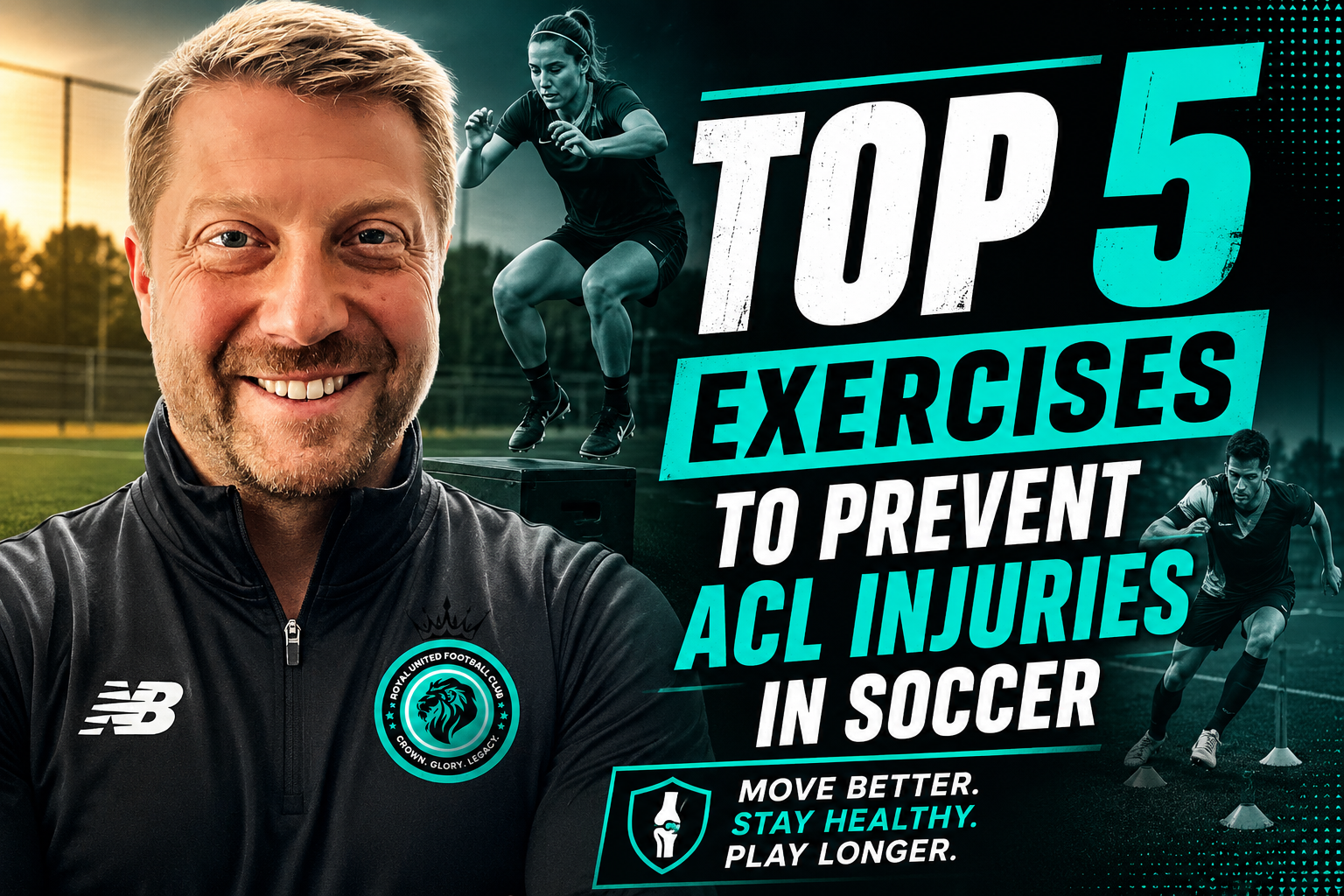


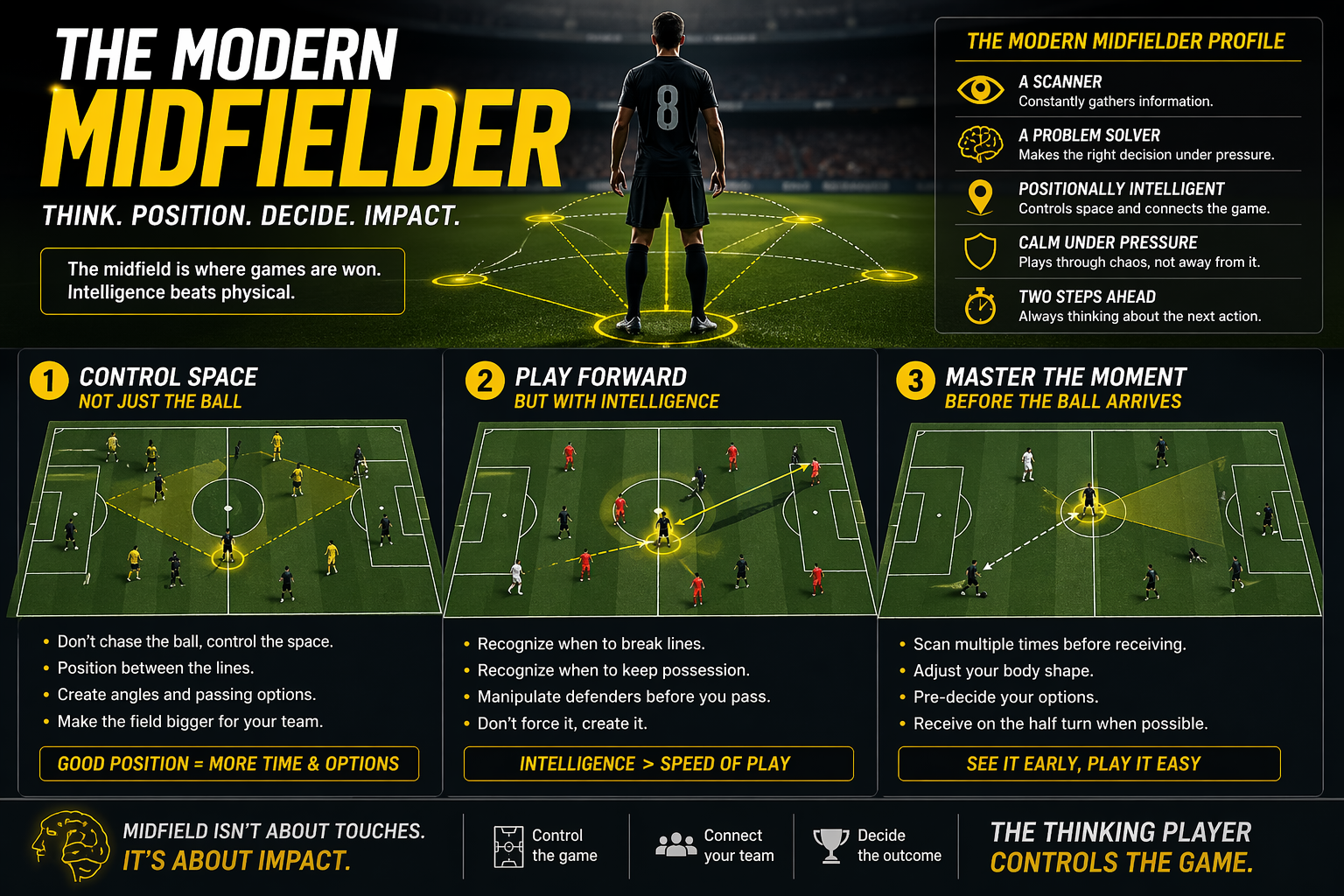


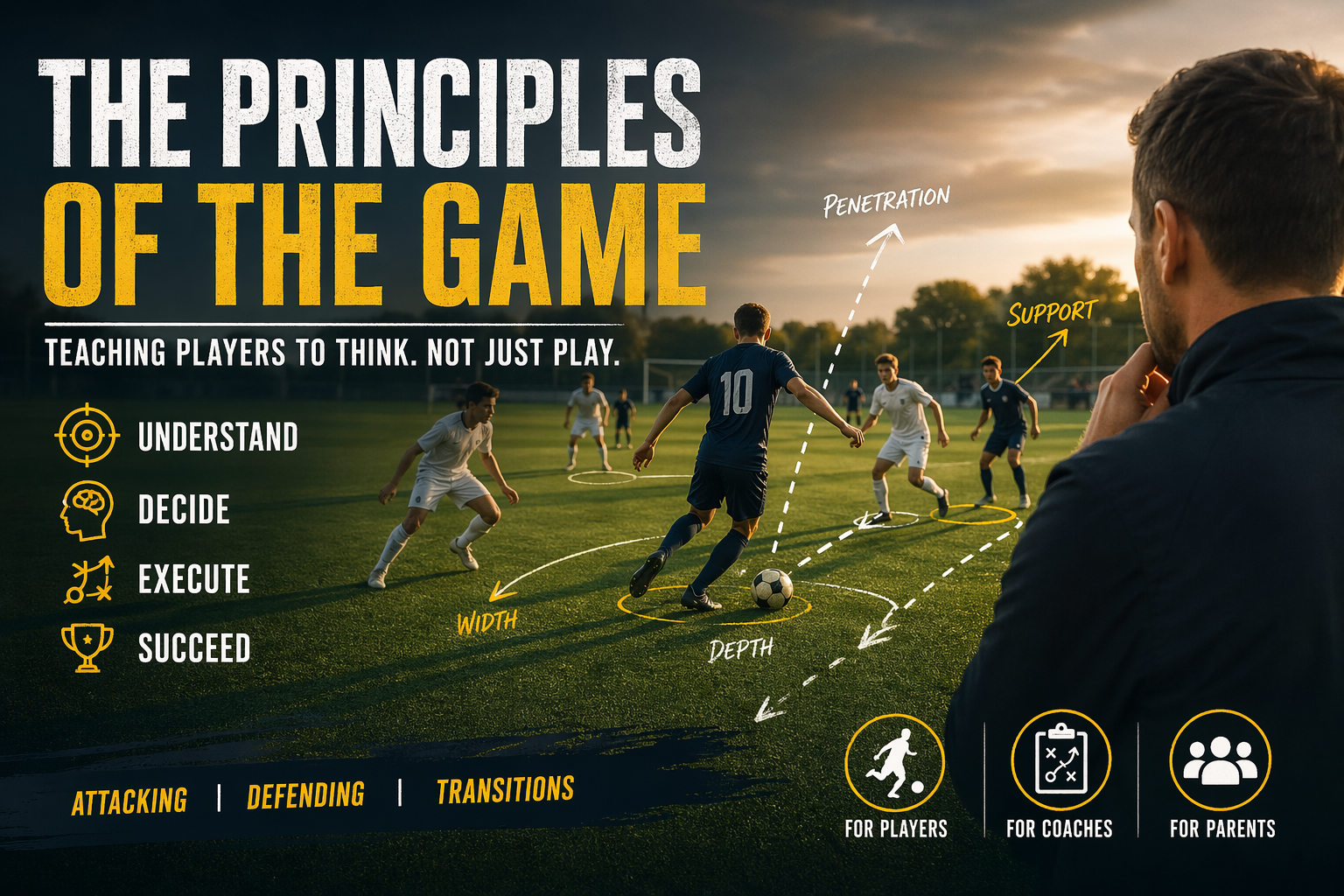


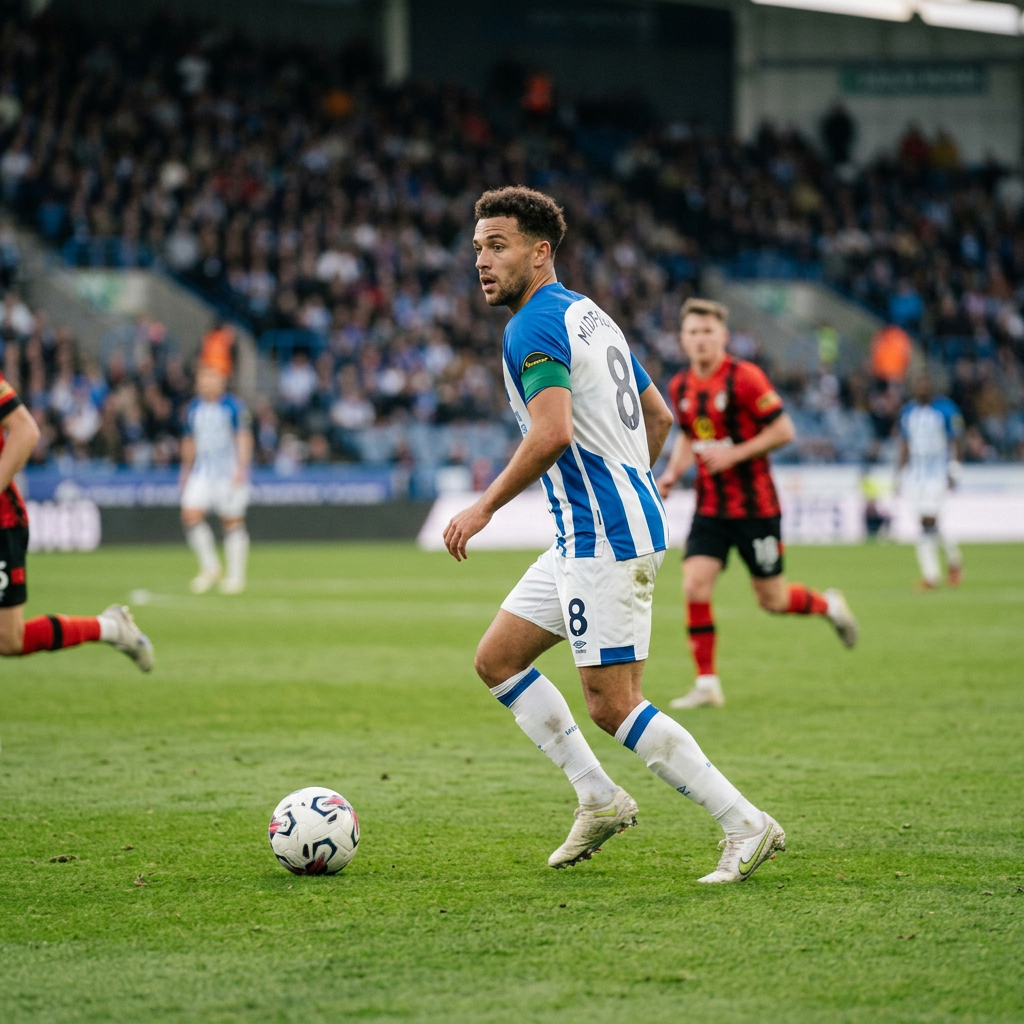


You must be logged in to post a comment.