Coach Nicholas Serenati

The Mind Behind the Game | Elite Soccer Coach, Player Development Specialist, and Founder of Royal United FC

  • The Complete Development Blueprint for the Modern #10

    The attacking center midfielder—often called the #10—is the most influential position on the field. This player connects midfield to attack, creates scoring opportunities, and controls the tempo of the game. At Royal United FC in St. Augustine, Florida, where we train players across St. Johns County and the greater Jacksonville area, the attacking midfielder is trained as the cognitive engine of the team, not just a technical player.

    This position demands a rare combination of intelligence, technical mastery, physical agility, and leadership. Below is a complete breakdown of the non-negotiable traits required to succeed in this role.


    1. Cognitive Speed: The Foundation of Everything

    The best attacking midfielders think faster than everyone else.

    They constantly process:

    • Defender positioning
    • Teammate movement
    • Open space
    • Passing lanes
    • Pressure direction

    This is called cognitive speed—the ability to see, decide, and act quickly.

    Elite attacking midfielders already know their next action before the ball arrives.

    Without cognitive speed, technical skill collapses under pressure.


    2. Scanning: The Habit That Separates Elite Attacking Center Midfielder

    https://www.sportsessionplanner.com/uploads/images/session_transitions/1208924.jpg
    https://kajabi-storefronts-production.kajabi-cdn.com/kajabi-storefronts-production/file-uploads/themes/2161204960/settings_images/1d5088-82bf-e77-14f-bcf1061fc3f2_Field_scan.jpeg
    https://www.sportsessionplanner.com/uploads/images/session_transitions/709828.jpg

    Scanning is constant visual information gathering.

    Elite players scan every 2–4 seconds to identify:

    • Defensive pressure
    • Open teammates
    • Available space
    • Next attacking opportunity

    Scanning improves:

    • Decision speed
    • First touch quality
    • Passing accuracy
    • Confidence under pressure

    This is one of the most trainable and most important skills.


    3. First Touch: The Ability to Escape Pressure

    https://www.sportsessionplanner.com/uploads/images/session_transitions/572466.jpg
    https://www.soccercoachweekly.net/AcuCustom/Sitename/DAM/009/attacking-midfielder-226-01.jpg
    https://www.sportsessionplanner.com/uploads/images/session_transitions/34070.jpg

    The first touch must do more than control the ball.

    It must:

    • Eliminate defenders
    • Create space
    • Advance the attack
    • Improve passing angles

    Poor first touch = pressure increases
    Elite first touch = pressure disappears

    This is the difference between surviving and controlling the game.


    4. Ability to Operate in Tight Spaces

    https://d3rqy6w6tyyf68.cloudfront.net/AcuCustom/Sitename/DAM/012/Januzai1.png
    https://www.soccer.com/wcm/connect/0b81a7f3-8410-4340-9d54-eef22306fc0b/10/10-Attacking-Midfielder.png?CACHEID=ROOTWORKSPACE-0b81a7f3-8410-4340-9d54-eef22306fc0b%2F10-pw.3oUq&MOD=AJPERES
    https://d3rqy6w6tyyf68.cloudfront.net/AcuCustom/Sitename/DAM/034/SimpleRondo1.png

    The attacking midfielder operates in the most crowded part of the field.

    They must remain calm while surrounded by defenders.

    This requires:

    • Ball mastery
    • Balance
    • Coordination
    • Confidence
    • Composure

    Players who panic cannot succeed here.

    Elite players remain calm and solve problems.


    5. Passing Vision: Creating Goal-Scoring Opportunities

    https://www.empirecityacademy.com/uploads/2/7/0/4/27045989/lane2_orig.png
    https://www.soccercoachweekly.net/AcuCustom/Sitename/DAM/009/attacking-midfielder-226-01.jpg

    The attacking midfielder must create opportunities others cannot see.

    Required passing abilities:

    • Through balls
    • Line-breaking passes
    • Combination play
    • Final-third penetration
    • Long switches

    Their job is to unlock defenses.

    They are the primary creator.


    6. Physical Traits: Acceleration and Agility

    https://goalkicksoccer.com/cdn/shop/products/kwikgoal-agility-ladder-16a601-490478.jpg?v=1747948047
    https://www.sportsessionplanner.com/uploads/images/session_transitions/2046972.jpg
    https://www.sportsessionplanner.com/uploads/images/session_transitions/2868878.jpg

    Physical performance supports cognitive performance.

    Essential physical traits include:

    • Explosive acceleration
    • Rapid change of direction
    • Deceleration control
    • Balance

    Acceleration creates separation.

    Deceleration creates control.

    Together, they create advantage.


    7. Work Rate and Defensive Contribution

    Modern attacking midfielders must defend.

    Responsibilities include:

    • Pressing opponents
    • Recovering possession
    • Supporting team shape
    • Tracking runners

    Complete players influence both attack and defense.


    8. Positional Intelligence: Finding Space Between Lines

    Elite attacking midfielders constantly reposition themselves.

    They understand:

    • Where space will open
    • When to move
    • How to create passing angles

    They make themselves available.

    Availability creates opportunity.


    9. Leadership and Confidence

    The attacking midfielder is often the emotional leader.

    They:

    • Demand the ball
    • Organize teammates
    • Control tempo
    • Influence team confidence

    They remain composed under pressure.

    Leadership is expressed through action.


    The Complete Trait Framework

    Elite attacking midfielders combine four core pillars:

    Cognitive

    • Scanning
    • Decision speed
    • Tactical awareness

    Technical

    • First touch
    • Passing precision
    • Ball control

    Physical

    • Acceleration
    • Agility
    • Balance

    Psychological

    • Confidence
    • Leadership
    • Emotional control

    All four must be developed.


    How We Train Attacking Midfielders in St. Augustine, Florida

    At Royal United FC, serving players in St. Augustine, World Golf Village, and Jacksonville, Florida, attacking midfielders are developed through:

    • Small-sided games
    • Cognitive training
    • Speed and agility development
    • Technical training under pressure
    • Tactical positioning work

    Development is intentional.

    Not accidental.


    Final Truth: The #10 Controls the Game

    The attacking center midfielder is the problem solver.

    They:

    • Create chances
    • Control tempo
    • Break defenses
    • Decide matches

    This position requires intelligence, discipline, and structured development.

    Players who master these non-negotiable traits become the most valuable players on the field.


    Nicholas Serenati, Ph.D. | Elite Youth Soccer Coach & Sports Performance Specialist

    Nicholas Serenati, Ph.D. is an elite youth soccer coach, sports performance specialist, and player development authority, and the founder and head academy coach of Royal United Football Club (RUFC) — an independent high-performance soccer academy dedicated to long-term player development.

    A former NCAA Division I soccer player at Mount St. Mary’s University, Coach Serenati has vast soccer coaching experience and holds strength and conditioning and sports performance certifications, bringing a rare integration of technical expertise, tactical intelligence, and applied sports science into modern youth development environments.

    With a Ph.D. in Interdisciplinary Studies and more than a decade of experience as a professor and program leader in higher education, Dr. Serenati bridges the worlds of academics and athletics, grounding his coaching methodology in evidence-based training, cognitive development, and whole-player performance systems.

    His areas of specialization include:

    • Youth soccer development• Technical mastery and tactical intelligence (soccer IQ)• Strength and conditioning for soccer players• Speed and agility training• Sports performance and injury resilience• Cognitive speed and decision-making• Small group and 1v1 soccer training• Long-term athlete development pathways

    Under his leadership, Royal United FC has evolved into a premier independent soccer academy recognized for its rigorous training environment, hybrid European development model, and individualized player development pathways designed to prepare student-athletes for high-performance environments.

    Dr. Serenati publishes research-driven insights on youth soccer development, elite training methodology, strength and conditioning, tactical intelligence, and sports performance systems across his digital platforms:

    • Official Site: Coach Nicholas Serenati

    • Academy Platform: Royal United FC

    • Substack Publication:

    Coach Nicholas Serenati’s Substack

    A Coach’s Notepad: Thoughts, Questions, and Explanations

    His mission is clear: to develop intelligent, technical, resilient footballers — and even greater people — through evidence-based coaching and long-term player development.
  • Coach Nicholas Serenati’s “The Modern Wing-Back”:

    The Modern Wing Back is Soccer’s Most Demanding and Misunderstood Position

    There was a time when the job of a wide defender was simple: stay back, defend your winger, clear danger.

    That time is gone.

    In the modern game, the wing-back is not a defender.

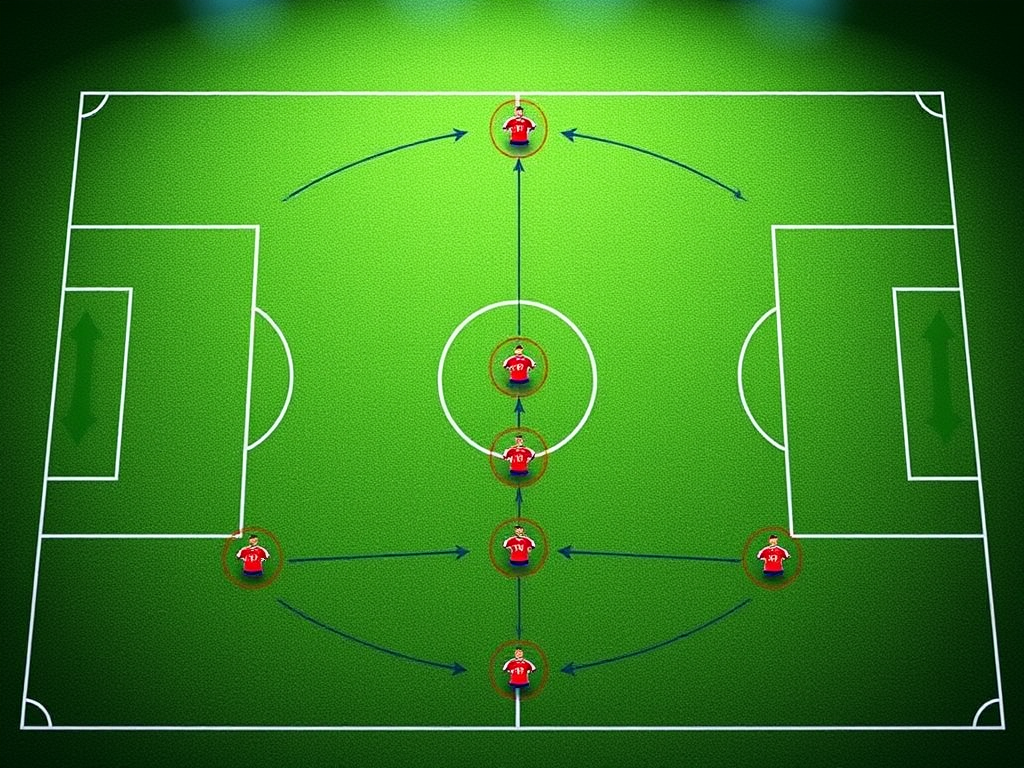
    The modern wing-back is a system regulator—a position responsible for stretching the field in possession, compressing space in defense, and constantly solving problems in transition.

    It is one of the most cognitively and physically demanding roles in soccer. And it is also one of the most misunderstood.

    Most players are taught what to do.

    Very few are taught why it matters.

    The difference between average and elite wing-backs lies in understanding the game’s deeper demands.

    Image
    Image

    Width Is Not Positioning. It Is Structural Manipulation.

    The first responsibility of a wing-back is to provide width. But this is not simply about standing near the touchline.

    Width manipulates the opponent’s defensive shape.

    When a modern wing-back holds width, opposing defenders are forced to stretch horizontally. This creates interior space for central midfielders, attacking midfielders, and forwards to operate.

    Width is not passive positioning.

    Width is strategic pressure.

    Elite wing-backs understand that their positioning determines whether their team can progress the ball cleanly through the thirds.

    Poor wing-backs chase the ball.

    Elite wing-backs create space before the ball arrives.

    Image
    Image

    Build-Up Play Begins With Body Shape and Awareness

    In possession, the wing-back becomes an essential outlet during build-up. They provide a passing option for center backs and defensive midfielders, particularly when opponents press aggressively.

    But availability alone is insufficient.

    Body shape determines possibility.

    Receiving with an open body shape allows the wing-back to:

    • Play forward immediately
    • Switch play efficiently
    • Attack space without delay
    • Avoid unnecessary pressure

    Closed body shape traps the player.

    Open body shape frees the system.

    This is where scanning becomes critical. The modern wing-backs must gather information before receiving so their first touch becomes an action—not a reaction.


    Timing Separates Elite Wing-Backs From Average Ones

    Overlapping and underlapping runs are not random movements.

    They are timing-based solutions.

    An overlapping run occurs when the wing-back runs outside the winger, creating an opportunity to cross or penetrate wide areas.

    An underlapping run occurs when the wing-back runs inside into the half-space, often creating overloads and surprise attacking opportunities.

    But the run itself is not the skill.

    The timing is.

    Running too early closes space.

    Running too late eliminates advantage.

    Elite wing-backs move when the defensive structure becomes vulnerable—not before, not after.

    They read the game’s signals.

    They do not guess.


    Transition Defines the Position

    The moment possession is lost, the wing-back becomes a defender again.

    This transition phase is where matches are often won or lost.

    Wing-backs must immediately recover position, protecting the wide channels and far-post space.

    The principle is simple:

    Sprint first. Organize second.

    Hesitation creates vulnerability.

    Immediate recovery restores defensive stability.

    This requires elite conditioning, but more importantly, elite awareness.

    Wing-backs must anticipate loss of possession before it happens.

    This allows them to react instantly.


    Defending Wide Is About Control, Not Aggression

    Wing-backs frequently face 1v1 defensive situations against fast, technical attackers.

    The objective is not to win the ball immediately.

    The objective is to control the attacker.

    Elite wing-backs:

    • Delay forward progress
    • Force attackers toward the sideline
    • Stay balanced and disciplined
    • Avoid diving into challenges

    Patience is defensive intelligence.

    Recklessness is defensive failure.

    The best wing-backs defend space first, then the ball.


    Back-Post Awareness Is a Cognitive Skill

    One of the most dangerous moments for any defense occurs when the ball is on the opposite side of the field.

    Wing-backs must recognize when to tuck inside and protect the back-post area.

    This requires constant scanning, awareness, and positional discipline.

    Failure to recognize this moment results in uncontested scoring opportunities.

    Elite wing-backs anticipate danger before it develops.

    They do not react after it appears.


    Decision-Making in the Final Third Determines Impact

    Wing-backs often arrive in advanced positions with opportunities to influence the game directly.

    But crossing blindly is not intelligence.

    It is surrender.

    Elite wing-backs evaluate the situation:

    • How many attackers are in the box?
    • Where are defenders positioned?
    • Is a cut-back more effective?
    • Is possession retention the better choice?

    Decision-making determines productivity.

    Activity alone means nothing.

    The modern wing-back is not measured by distance covered, but by problems solved.


    The Wing-Back Is a Cognitive Position

    The modern wing-back is not simply a runner.

    They are a decision-maker operating across every phase of the game.

    They must:

    • Understand space
    • Recognize timing
    • Process information quickly
    • Execute under pressure
    • Transition instantly between attack and defense

    This is why wing-backs are among the most valuable players in modern tactical systems.

    They connect phases.

    They regulate width.

    They stabilize transitions.

    They create and prevent goals.


    The Future Wing-Back Is Built, Not Born

    At Royal United FC in St. Augustine, Florida, wing-backs are trained through cognitive and tactical development—not just physical repetition.

    Players are taught to understand:

    Why width matters
    When to overlap
    When to recover
    How to interpret space
    How to make decisions under pressure

    Because modern soccer does not reward players who simply run.

    It rewards players who understand.


    Final Thought

    The wing-back is no longer a supporting role.

    It is a central role.

    The modern wing-back is part defender, part midfielder, part attacker—and entirely a thinker.

    Because the best wing-backs do not just play their position.

    They control the structure of the game itself.


    If you are a player in St. Augustine, Jacksonville, or Ponte Vedra looking to develop as a modern wide player, training must go beyond fitness and technique.

    It must develop intelligence.

    Because in the modern game, understanding is the ultimate advantage.

    And the wing-backs who understand the game—

    Control it.


    Nicholas Serenati, Ph.D. | Elite Youth Soccer Coach & Sports Performance Specialist

    Nicholas Serenati, Ph.D. is an elite youth soccer coach, sports performance specialist, and player development authority, and the founder and head academy coach of Royal United Football Club (RUFC) — an independent high-performance soccer academy dedicated to long-term player development.

    A former NCAA Division I soccer player at Mount St. Mary’s University, Coach Serenati has vast soccer coaching experience and holds strength and conditioning and sports performance certifications, bringing a rare integration of technical expertise, tactical intelligence, and applied sports science into modern youth development environments.

    With a Ph.D. in Interdisciplinary Studies and more than a decade of experience as a professor and program leader in higher education, Dr. Serenati bridges the worlds of academics and athletics, grounding his coaching methodology in evidence-based training, cognitive development, and whole-player performance systems.

    His areas of specialization include:

    • Youth soccer development• Technical mastery and tactical intelligence (soccer IQ)• Strength and conditioning for soccer players• Speed and agility training• Sports performance and injury resilience• Cognitive speed and decision-making• Small group and 1v1 soccer training• Long-term athlete development pathways

    Under his leadership, Royal United FC has evolved into a premier independent soccer academy recognized for its rigorous training environment, hybrid European development model, and individualized player development pathways designed to prepare student-athletes for high-performance environments.

    Dr. Serenati publishes research-driven insights on youth soccer development, elite training methodology, strength and conditioning, tactical intelligence, and sports performance systems across his digital platforms:

    • Official Site: Coach Nicholas Serenati

    • Academy Platform: Royal United FC

    • Substack Publication:

    Coach Nicholas Serenati’s Substack

    A Coach’s Notepad: Thoughts, Questions, and Explanations

    His mission is clear: to develop intelligent, technical, resilient footballers — and even greater people — through evidence-based coaching and long-term player development.

  • Every coach says it.

    “Scan.”

    They shout it from the sideline. They repeat it in training. They demand it before every reception.

    But here’s the uncomfortable truth:

    Most players are scanning constantly—and still making the wrong decisions.

    Because scanning, as commonly coached, has been reduced to a mechanical ritual. A head turn. A checklist item. A performative gesture.

    The game does not reward head movement.

    The game rewards information.

    And information is only valuable if it changes what happens next.

    This is where the S.C.A.N. Framework changes everything.


    The Fatal Misunderstanding of Scanning in Modern Soccer

    In elite environments—from European academies to top NCAA programs—scanning is not taught as a behavior. It is taught as a cognitive weapon.

    Yet across youth soccer in the United States, particularly in competitive environments like St. Augustine, Jacksonville, and across Northeast Florida, players are told to scan without ever being taught:

    • What they are looking for
    • Why it matters
    • When the information becomes actionable
    • How it changes their next decision

    This creates players who look active—but remain cognitively passive.

    They move their head, but they do not move the game.

    Scanning is not physical.

    Scanning is neurological.

    It is the brain’s ability to collect relevant information under pressure, recognize patterns, and make decisions before the ball arrives.

    This is the foundation of elite Soccer IQ.


    The S.C.A.N. Framework: A Cognitive Model for Elite Player Development

    The S.C.A.N. Framework reframes scanning as a structured perceptual process composed of four distinct cognitive phases:

    S — Selective Perception

    C — Context Recognition

    A — Anticipatory Decision-Making

    N — Next Action Execution

    This is not theory. This is how elite players actually operate.

    Let’s break it down.


    S — Selective Perception: Seeing What Matters

    https://www.sportsessionplanner.com/uploads/images/session_transitions/1127206.jpg
    https://cdn.shopify.com/s/files/1/0094/7218/0279/files/Scanning_blog_post_4_players_using_ROXPro_for_soccer_scanning_drills_and_peripheral_vision_training.jpg?v=1736863129
    https://static.wixstatic.com/media/861526_be756b411d154851a65ccee6d1c01501~mv2.jpg/v1/fill/w_528%2Ch_302%2Cal_c%2Cq_80%2Cusm_0.66_1.00_0.01%2Cenc_avif%2Cquality_auto/861526_be756b411d154851a65ccee6d1c01501~mv2.jpg

    4

    The field contains thousands of visual stimuli. Teammates, opponents, space, movement, pressure.

    Elite players do not see everything.

    They see what matters most.

    Selective perception means filtering the environment for actionable information:

    • Where is pressure coming from?
    • Where is the free space?
    • Who is the next viable passing option?
    • Where is the defensive imbalance?

    Novice players scan randomly.

    Elite players scan with intent.

    They are not looking for movement.

    They are looking for solutions.


    C — Context Recognition: Understanding the Situation

    Information without context is useless.

    Seeing an opponent behind you only matters if you understand what that opponent can do next.

    Context recognition allows players to interpret the environment:

    • Is the defender accelerating or decelerating?
    • Is space opening or closing?
    • Is the team in build-up, progression, or penetration phase?
    • Is risk appropriate or dangerous in this moment?

    This is where Soccer IQ separates players.

    Two players can see the same field.

    Only one understands it.


    A — Anticipatory Decision-Making: Deciding Before Receiving

    https://www.sportsessionplanner.com/uploads/images/session_transitions/198488.jpg
    https://www.sportsessionplanner.com/uploads/images/session_transitions/337843.jpg
    https://www.sportsessionplanner.com/uploads/images/session_transitions/410944.jpg

    Elite players do not wait until they receive the ball to decide.

    They decide before the ball arrives.

    Scanning allows players to pre-program their next action:

    • Turn
    • Play one-touch
    • Protect
    • Switch play
    • Break a line
    • Accelerate into space

    This is why elite players appear calm under pressure.

    They are not reacting.

    They are executing pre-loaded decisions.

    The ball does not surprise them.

    They already know what comes next.


    N — Next Action Execution: Acting Without Hesitation

    The final stage is execution.

    This is where perception becomes performance.

    Because the decision was made early, execution becomes faster, cleaner, and more effective.

    This creates what appears to be “more time.”

    But time was not created physically.

    It was created cognitively.

    Elite players operate seconds ahead of everyone else.


    Why Traditional Coaching Fails to Develop Scanning

    Most training environments fail because they rely on verbal cues instead of cognitive training design.

    Coaches shout:

    “Scan!”

    But never create exercises that require scanning to succeed.

    Players comply behaviorally but never develop perceptual intelligence.

    Real scanning development only occurs when training environments:

    • Restrict time and space
    • Create decision-making consequences
    • Force players to solve problems before receiving
    • Replicate game-realistic pressure

    This is why small-sided games, positional play, and constrained environments are essential for cognitive development.

    Players do not develop scanning by being told.

    They develop scanning by being forced to think.


    Why This Matters for Player Development in St. Augustine and Northeast Florida

    At Royal United FC in St. Augustine, Florida, scanning is trained as part of a larger cognitive development model centered on Soccer IQ, decision-making speed, and perceptual awareness.

    Because the modern game is faster than ever.

    Players who rely solely on athleticism eventually plateau.

    Players who develop perceptual intelligence continue to evolve.

    The difference between average and elite is not physical.

    It is cognitive.

    And cognitive speed is trainable.


    The Players Who See First, Win First

    Watch elite midfielders like Luka Modrić, Kevin De Bruyne, or Sergio Busquets.

    They are not faster physically.

    They are faster perceptually.

    They gather information earlier.

    They decide earlier.

    They execute earlier.

    They control the game before others realize what is happening.

    This is the true purpose of scanning.

    Not movement.

    Mastery.


    The Future of Player Development Is Cognitive

    The S.C.A.N. Framework represents a shift away from behavior-based coaching toward intelligence-based development.

    The future belongs to players who can:

    • Process information faster
    • Recognize patterns earlier
    • Solve problems under pressure
    • Execute without hesitation

    This is trainable.

    This is measurable.

    This is the future.


    Call to Action: Train the Mind, Transform the Player

    If you are a player, coach, or parent in St. Augustine, Jacksonville, Ponte Vedra, or the greater Northeast Florida soccer community, the question is no longer:

    “Is the player scanning?”

    The question is:

    Is the player understanding what they see?

    Because vision without understanding is useless.

    But perception with intent changes everything.

    At Royal United FC, we train players to think faster, see clearer, and play smarter through cognitive-based training models designed to accelerate Soccer IQ and decision-making speed.

    If you want to develop a player who doesn’t just play the game—but controls it—

    Visit:
    http://www.royalunitedfc.com
    http://www.coachnicholasserenati.com

    Or apply for private training, small group sessions, and elite cognitive development programs in St. Augustine, Florida.

    Because the future of soccer belongs to the players who see first.

    And the players who see first—

    Win first.


    Nicholas Serenati, Ph.D. | Elite Youth Soccer Coach & Sports Performance Specialist

    Nicholas Serenati, Ph.D. is an elite youth soccer coach, sports performance specialist, and player development authority, and the founder and head academy coach of Royal United Football Club (RUFC) — an independent high-performance soccer academy dedicated to long-term player development.

    A former NCAA Division I soccer player at Mount St. Mary’s University, Coach Serenati has vast soccer coaching experience and holds strength and conditioning and sports performance certifications, bringing a rare integration of technical expertise, tactical intelligence, and applied sports science into modern youth development environments.

    With a Ph.D. in Interdisciplinary Studies and more than a decade of experience as a professor and program leader in higher education, Dr. Serenati bridges the worlds of academics and athletics, grounding his coaching methodology in evidence-based training, cognitive development, and whole-player performance systems.

    His areas of specialization include:

    • Youth soccer development• Technical mastery and tactical intelligence (soccer IQ)• Strength and conditioning for soccer players• Speed and agility training• Sports performance and injury resilience• Cognitive speed and decision-making• Small group and 1v1 soccer training• Long-term athlete development pathways

    Under his leadership, Royal United FC has evolved into a premier independent soccer academy recognized for its rigorous training environment, hybrid European development model, and individualized player development pathways designed to prepare student-athletes for high-performance environments.

    Dr. Serenati publishes research-driven insights on youth soccer development, elite training methodology, strength and conditioning, tactical intelligence, and sports performance systems across his digital platforms:

    • Official Site: https://coachnicholasserenati.com

    • Academy Platform: https://royalunitedfc.com

    • Substack Publication: https://nicholasserenati.substack.com

    His mission is clear: to develop intelligent, technical, resilient footballers — and even greater people — through evidence-based coaching and long-term player development.

  • Coach Nicholas Serenati’s Uncomfortable Coaching Truth #2: Why Overcoaching in Youth Soccer Stops Player Development

    Most Players Don’t Plateau — They’re Over-Coached. This is the truth that quietly ruins development while everyone feels productive.


    Overcoaching in youth soccer is a problem.

    When a player stops improving, the default reaction is predictable.

    More instruction.
    More drills.
    More correction.
    More talking.

    The assumption is simple:
    If they aren’t progressing, they must need more help.

    In reality, the opposite is usually true.

    Most players don’t plateau because they lack information.
    They plateau because they’re drowning in it.


    The Illusion of Progress

    Over-coaching feels productive.

    Players are busy.
    Coaches are active.
    Parents hear constant feedback and assume development is happening.

    But activity is not adaptation.

    A player who is constantly told where to stand, when to pass, how to move, and what decision to make is not learning — they’re complying.

    Compliance looks clean in training.
    It collapses under pressure.


    Why Over-Coached Players Struggle in Games

    Matches don’t provide instructions.

    There’s no pause button.
    No rewind.
    No coach whispering the “right answer.”

    When players are conditioned to rely on constant direction, three things happen:

    1. Decision speed slows
      They wait instead of read.
    2. Confidence erodes
      Mistakes feel catastrophic because autonomy was never trained.
    3. Creativity disappears
      Players stop solving problems and start avoiding blame.

    These players don’t fail because they don’t care.
    They fail because they were never allowed to think independently.


    The Sideline Problem No One Wants to Admit

    Watch most youth games.

    The loudest voice is rarely the opponent.
    It’s the coach — or worse, the parents.

    “Time!”
    “Man on!”
    “Pass it!”
    “Clear it!”

    Every shout steals a rep of decision-making.

    Yes, some cues help young players early.
    But constant direction trains dependency, not awareness.

    Elite environments are quieter than people expect.

    Not because coaches don’t care —
    but because they understand when silence teaches more than sound.


    Training vs Teaching

    Teaching is explaining.
    Training is engineering experiences.

    Elite coaching isn’t about delivering answers.
    It’s about designing problems that force players to find them.

    That means:

    • constraints instead of commands
    • guided discovery instead of constant correction
    • allowing mistakes to breathe instead of suffocating them

    Messy training often produces composed players.
    Over-controlled training produces fragile ones.


    The Long-Term Cost of Over-Coaching

    At young ages, over-coached players often win.

    They’re organized.
    They’re obedient.
    They execute rehearsed patterns well.

    But as levels rise:

    • space shrinks
    • speed increases
    • opponents adapt

    And the player who always needed instructions has nothing left to lean on.

    This is why so many “can’t-miss” youth players quietly disappear.

    Not from lack of talent —
    from lack of autonomy.


    What Great Coaches Actually Do

    Great coaches don’t disappear.

    They become intentional.

    They:

    • talk less, observe more
    • coach behaviors, not every action
    • allow struggle without panic
    • correct after reps, not during every one

    They understand a hard truth:

    Players don’t grow when they’re protected from uncertainty.
    They grow when they learn to control it.


    The Real Question Every Coach Should Ask

    Not:
    “Did I explain it clearly?”

    But:
    “Did the player solve it independently under pressure?”

    If the answer is no, the coaching didn’t transfer — no matter how good it sounded.


    Final Thought

    Over-coaching isn’t loud because it’s effective.
    It’s loud because it’s insecure.

    Elite coaching requires restraint.

    And restraint is uncomfortable.

    But if your goal is to build players who think, adapt, and perform when it matters — silence, space, and trust are not risks.

    They’re requirements.


    Nicholas Serenati, Ph.D. | Elite Youth Soccer Coach & Sports Performance Specialist

    Nicholas Serenati, Ph.D. is an elite youth soccer coach, sports performance specialist, and player development authority, and the founder and head academy coach of Royal United Football Club (RUFC) — an independent high-performance soccer academy dedicated to long-term player development.

    A former NCAA Division I soccer player at Mount St. Mary’s University, Coach Serenati has vast soccer coaching experience and holds strength and conditioning and sports performance certifications, bringing a rare integration of technical expertise, tactical intelligence, and applied sports science into modern youth development environments.

    With a Ph.D. in Interdisciplinary Studies and more than a decade of experience as a professor and program leader in higher education, Dr. Serenati bridges the worlds of academics and athletics, grounding his coaching methodology in evidence-based training, cognitive development, and whole-player performance systems.

    His areas of specialization include:

    • Youth soccer development• Technical mastery and tactical intelligence (soccer IQ)• Strength and conditioning for soccer players• Speed and agility training• Sports performance and injury resilience• Cognitive speed and decision-making• Small group and 1v1 soccer training• Long-term athlete development pathways

    Under his leadership, Royal United FC has evolved into a premier independent soccer academy recognized for its rigorous training environment, hybrid European development model, and individualized player development pathways designed to prepare student-athletes for high-performance environments.

    Dr. Serenati publishes research-driven insights on youth soccer development, elite training methodology, strength and conditioning, tactical intelligence, and sports performance systems across his digital platforms:

    • Official Site: https://coachnicholasserenati.com

    • Academy Platform: https://royalunitedfc.com

    • Substack Publication: https://nicholasserenati.substack.com

    His mission is clear: to develop intelligent, technical, resilient footballers — and even greater people — through evidence-based coaching and long-term player development.

  • Coach Nicholas Serenati’s Uncomfortable Coaching Truth #1: Why Winning Early in Youth Soccer Is Often a Red Flag

    Winning early and at young ages is often mistaken for development.
    In reality, it’s frequently early physical advantage masquerading as progress.

    In youth soccer, scorelines and trophies are the most visible metrics. They’re easy to market, easy to celebrate, and easy to misunderstand. But here’s the truth most parents and coaches aren’t told:

    Early winning rarely predicts long-term success.

    In many cases, it hides the very weaknesses that later derail players.


    The Youth Soccer Illusion: When Winning Lies

    At younger ages, many teams dominate for simple reasons:

    • Players are bigger
    • Players are faster
    • Players mature earlier

    That physical edge overwhelms opponents. The scoreboard rewards it immediately.

    But soccer is not a static game—and youth development is not linear.

    What works at 10 or 12 often fails completely by 15 or 16, when:

    • Physical advantages even out
    • Space and time disappear
    • Decision-making speed becomes the real separator

    The game stops being forgiving.


    Why Early Success Feels So Convincing

    Early winning creates a dangerous feedback loop:

    • Parents feel reassured their child is “on the right path”
    • Coaches feel validated in their methods
    • Clubs use results as marketing leverage
    • Players stop being challenged

    Everyone relaxes—right when learning should accelerate.

    The problem isn’t winning itself.
    The problem is what winning often replaces.


    The Hidden Gaps Early Winning Covers Up

    Early dominance frequently conceals critical development gaps, including:

    ❌ Poor decision-making under pressure

    When players rely on speed or strength, they don’t need to think quickly. Later, that lack of cognitive speed becomes obvious.

    ❌ Weak first touch in tight spaces

    Extra time and space hide technical inefficiencies. Better opponents remove both instantly.

    ❌ Limited tactical awareness

    Players who overpower games early often never learn how to read them.

    ❌ Inefficient movement and braking mechanics

    Raw speed without control leads to poor change of direction, injury risk, and declining effectiveness as the game speeds up.

    These gaps remain invisible—until the physical advantage fades.

    And it always fades.


    The Uncomfortable Reality of Long-Term Development

    Here’s the truth most people avoid:

    Players who struggle early—but are forced to solve problems—often surpass early winners later.

    Why?

    Because they must learn to:

    • Read the game
    • Anticipate instead of react
    • Make decisions under pressure
    • Compete without relying on physical dominance

    These players build skills that scale as competition increases.

    The game eventually rewards thinkers, not bullies.


    What Actually Matters in Youth Soccer Development

    The real indicators of long-term success aren’t trophies at 10 or 12.

    They’re the ability to:

    • Think under pressure
    • Execute at true game speed
    • Adapt when the game stops going your way
    • Solve problems in unpredictable environments

    Those qualities don’t come from outcome-driven training.

    They come from deliberately designed environments that challenge:

    • Perception
    • Decision-making
    • Technical execution under constraint

    That’s development. Everything else is decoration.


    What Parents and Coaches Should Do Instead

    If the goal is real progress—not short-term validation—priorities must change.

    ✅ Measure development, not trophies

    Ask how a player is performing, not just who won.

    ✅ Prioritize learning moments over results

    Mistakes are data. Avoiding them stalls growth.

    ✅ Value problem-solvers over early dominators

    Players who adapt survive. Players who rely on advantage fade.

    Because the game keeps receipts.


    Final Thought: The Game Always Tells the Truth

    Winning early feels good.
    Developing properly lasts longer.

    The game never lies—it only exposes what training hides.

    If development is the goal, results must be contextualized, not worshipped.


    Nicholas Serenati, Ph.D. | Elite Youth Soccer Coach & Sports Performance Specialist

    Nicholas Serenati, Ph.D. is an elite youth soccer coach, sports performance specialist, and player development authority, and the founder and head academy coach of Royal United Football Club (RUFC) — an independent high-performance soccer academy dedicated to long-term player development.

    A former NCAA Division I soccer player at Mount St. Mary’s University, Coach Serenati has vast soccer coaching experience and holds strength and conditioning and sports performance certifications, bringing a rare integration of technical expertise, tactical intelligence, and applied sports science into modern youth development environments.

    With a Ph.D. in Interdisciplinary Studies and more than a decade of experience as a professor and program leader in higher education, Dr. Serenati bridges the worlds of academics and athletics, grounding his coaching methodology in evidence-based training, cognitive development, and whole-player performance systems.

    His areas of specialization include:

    • Youth soccer development• Technical mastery and tactical intelligence (soccer IQ)• Strength and conditioning for soccer players• Speed and agility training• Sports performance and injury resilience• Cognitive speed and decision-making• Small group and 1v1 soccer training• Long-term athlete development pathways

    Under his leadership, Royal United FC has evolved into a premier independent soccer academy recognized for its rigorous training environment, hybrid European development model, and individualized player development pathways designed to prepare student-athletes for high-performance environments.

    Dr. Serenati publishes research-driven insights on youth soccer development, elite training methodology, strength and conditioning, tactical intelligence, and sports performance systems across his digital platforms:

    • Official Site: https://coachnicholasserenati.com

    • Academy Platform: https://royalunitedfc.com

    • Substack Publication: https://nicholasserenati.substack.com

    His mission is clear: to develop intelligent, technical, resilient footballers — and even greater people — through evidence-based coaching and long-term player development.

  • Coach Nicholas Serenati’s Top 5 Speed & Agility Truths Most Programs Get Wrong

    When Coach Nicholas Serenati talks about the top 5 speed & agility truths thta most programs get wrong, he is outlining conditions that are not benefiting the player as a whole.

    Let’s be honest: most “speed training” looks good on Instagram and does absolutely nothing on Saturday. If it doesn’t transfer to game moments—pressure, chaos, decisions—it’s noise. Below are the five truths that separate real performance from conditioning theater.

    Coach Nicholas Serenati’s Top 5 Speed & Agility Truths Most Programs Get Wrong

    1. Speed Without Decision-Making Is Fake Speed

    If a player only looks fast in straight lines, they’re not fast—they’re rehearsed.

    Game speed is perception → decision → action. The fastest players aren’t just moving quickly; they’re choosing earlier. Training that ignores scanning, cues, and choices creates athletes who win races in warm-ups and lose duels in matches.

    Bottom line:
    If there’s no decision, it’s not speed—it’s cardio with spikes.


    2. Agility Is Not Ladder Work

    Agility is reaction to stimulus, not memorized foot patterns.

    Ladders can help coordination early on, but once they dominate a program, progress stalls. Real agility demands an external cue—an opponent’s movement, a visual signal, a ball flight, a space that suddenly closes.

    Bottom line:
    If the athlete already knows the pattern, you’re training choreography—not agility.


    3. Strength Is the Governor of Speed

    You don’t sprint with effort. You sprint with force.

    Weak athletes leak force at ground contact. That means slower acceleration, poorer deceleration, and higher injury risk. Proper strength training doesn’t make players bulky—it gives them the capacity to express speed safely.

    Bottom line:
    Speed is rented. Strength owns the building.


    4. Most “Speed Training” Ignores Braking

    Everyone loves acceleration. Very few train stopping.

    Yet soccer is a game of violent decelerations: pressing, cutting, recovering, changing direction under pressure. Players who can’t brake efficiently lose balance, lose time, and lose duels.

    Bottom line:
    If a player can’t stop well, they can’t move well.


    5. Early Speed Peaks Are a Trap

    Early developers win games at 9, 10, 11… then disappear.

    Why? Because speed masked poor movement quality, poor positioning, and poor decision-making. When the field gets bigger and opponents get smarter, raw speed alone stops working.

    Bottom line:
    The goal isn’t to be the fastest kid now—it’s to be fast when it matters later.


    What This Means for Parents and Players

    If a program promises speed without teaching:

    • movement efficiency
    • strength foundations
    • deceleration mechanics
    • decision-making under pressure

    …it’s incomplete.

    True speed development is earned, not advertised.


    Nicholas Serenati, Ph.D. | Elite Youth Soccer Coach & Sports Performance Specialist

    Nicholas Serenati, Ph.D. is an elite youth soccer coach, sports performance specialist, and player development authority, and the founder and head academy coach of Royal United Football Club (RUFC) — an independent high-performance soccer academy dedicated to long-term player development.

    A former NCAA Division I soccer player at Mount St. Mary’s University, Coach Serenati has vast soccer coaching experience and holds strength and conditioning and sports performance certifications, bringing a rare integration of technical expertise, tactical intelligence, and applied sports science into modern youth development environments.

    With a Ph.D. in Interdisciplinary Studies and more than a decade of experience as a professor and program leader in higher education, Dr. Serenati bridges the worlds of academics and athletics, grounding his coaching methodology in evidence-based training, cognitive development, and whole-player performance systems.

    His areas of specialization include:

    • Youth soccer development• Technical mastery and tactical intelligence (soccer IQ)• Strength and conditioning for soccer players• Speed and agility training• Sports performance and injury resilience• Cognitive speed and decision-making• Small group and 1v1 soccer training• Long-term athlete development pathways

    Under his leadership, Royal United FC has evolved into a premier independent soccer academy recognized for its rigorous training environment, hybrid European development model, and individualized player development pathways designed to prepare student-athletes for high-performance environments.

    Dr. Serenati publishes research-driven insights on youth soccer development, elite training methodology, strength and conditioning, tactical intelligence, and sports performance systems across his digital platforms:

    • Official Site: https://coachnicholasserenati.com

    • Academy Platform: https://royalunitedfc.com

    • Substack Publication: https://nicholasserenati.substack.com

    His mission is clear: to develop intelligent, technical, resilient footballers — and even greater people — through evidence-based coaching and long-term player development.

  • Coach Nicholas Serenati: Why Soccer IQ Beats Talent in the Modern Game

    Coach Nicholas Serenati believes the greatest separator in modern soccer is not speed, strength, or raw athletic talent—it is Soccer IQ.

    Soccer IQ refers to a player’s ability to read the game, process information quickly, and make effective decisions under pressure. It is the mental operating system that allows a player to recognize patterns, anticipate actions, and choose the correct solution in a constantly changing environment.

    Across every level of the game, players who consistently make better decisions outperform more athletic peers. The modern game is faster, more compressed, and less forgiving than ever before. Defensive lines are organized, pressing systems are aggressive, and time on the ball is limited.

    Space disappears quickly.
    Time disappears even faster.
    Intelligence is what remains.

    A player with high Soccer IQ does not simply react to the game—they understand the game before the moment arrives.


    The Role of Cognitive Speed

    As a soccer coach and sports performance specialist, Coach Nicholas Serenati has built his development model around what he calls cognitive speed.

    Cognitive speed is the ability to:

    Scan the environment before receiving the ball
    Process positional information about teammates, opponents, and space
    Anticipate the next phase of play
    Execute the correct action quickly and efficiently

    In practical terms, cognitive speed is the difference between a player who receives the ball and then thinks, and a player who thinks first and receives with a plan already formed.

    Elite players constantly scan the field before the ball arrives. They collect information about pressure, passing options, and available space. This allows them to play faster—not because they run faster, but because their decisions are already made.


    Why Traditional Training Often Misses the Mark

    Too often, youth development focuses heavily on isolated technical drills and early physical dominance.

    Players spend large portions of training repeating movements without opponents, without pressure, and without the complexity of the real game environment. While these exercises can improve basic technique, they rarely train the most important element of elite performance:

    Decision-making under pressure.

    Young players who rely primarily on athletic advantages—speed, size, or strength—often find that these advantages disappear as the level of competition increases. When the physical gap narrows, the players who survive are the ones who can think, adapt, and solve problems in real time.

    Without tactical awareness, pattern recognition, and positional understanding, raw talent eventually reaches a ceiling.

    Coach Serenati’s model aims to raise that ceiling.


    Training the Thinking Player

    At Royal United FC, Soccer IQ is developed through training environments designed to replicate the cognitive demands of the real game.

    Rather than isolating technique from decision-making, training integrates technical execution with tactical understanding.

    Key components of the model include:

    Game-Realistic Training Environments
    Sessions are structured to mirror real match situations. Players operate in spaces, roles, and scenarios that reflect actual game problems.

    Small-Sided Games with Constraints
    Small-sided formats accelerate decision-making by increasing touches, pressure, and transitions. Specific constraints—such as limited touches, directional goals, or positional rules—force players to adapt and think more quickly.

    Decision-Based Conditioning
    Physical conditioning is embedded within game scenarios so players learn to think clearly while fatigued, a critical requirement during competitive matches.

    Guided Reflection and Accountability
    Players are encouraged to analyze their decisions, identify mistakes, and understand why certain solutions succeed or fail. Learning is reinforced through reflection rather than simple repetition.

    Through this process, players begin to develop the habits that define elite performers: scanning constantly, anticipating patterns, and managing the tempo of the game.


    The Long-Term Advantage

    Coach Nicholas Serenati’s philosophy is grounded in a simple but powerful principle:

    Talent may open the door, but intelligence keeps players in the room.

    Athleticism can create early success.
    Technique can create moments of brilliance.

    But the players who sustain performance over time—especially at higher levels of the game—are those who can interpret the game faster than everyone around them.

    In modern soccer, the most dangerous player on the field is not always the fastest.

    It is the player who already knows what is about to happen next.


    Nicholas Serenati, Ph.D. | Elite Youth Soccer Coach & Sports Performance Specialist

    Nicholas Serenati, Ph.D. is an elite youth soccer coach, sports performance specialist, and player development authority, and the founder and head academy coach of Royal United Football Club (RUFC) — an independent high-performance soccer academy dedicated to long-term player development.

    A former NCAA Division I soccer player at Mount St. Mary’s University, Coach Serenati has vast soccer coaching experience and holds strength and conditioning and sports performance certifications, bringing a rare integration of technical expertise, tactical intelligence, and applied sports science into modern youth development environments.

    With a Ph.D. in Interdisciplinary Studies and more than a decade of experience as a professor and program leader in higher education, Dr. Serenati bridges the worlds of academics and athletics, grounding his coaching methodology in evidence-based training, cognitive development, and whole-player performance systems.

    His areas of specialization include:

    • Youth soccer development• Technical mastery and tactical intelligence (soccer IQ)• Strength and conditioning for soccer players• Speed and agility training• Sports performance and injury resilience• Cognitive speed and decision-making• Small group and 1v1 soccer training• Long-term athlete development pathways

    Under his leadership, Royal United FC has evolved into a premier independent soccer academy recognized for its rigorous training environment, hybrid European development model, and individualized player development pathways designed to prepare student-athletes for high-performance environments.

    Dr. Serenati publishes research-driven insights on youth soccer development, elite training methodology, strength and conditioning, tactical intelligence, and sports performance systems across his digital platforms:

    • Official Site: https://coachnicholasserenati.com

    • Academy Platform: https://royalunitedfc.com

    • Substack Publication: https://nicholasserenati.substack.com

    His mission is clear: to develop intelligent, technical, resilient footballers — and even greater people — through evidence-based coaching and long-term player development.

  • Coach Nicholas Serenati’s Speed of Play: The Real Separator in Modern Soccer

    Why Faster Thinkers Beat Faster Runners

    Every parent thinks their child needs to get faster. More sprint work. More agility ladders. More explosiveness drills.

    But here’s the uncomfortable truth:

    Speed is not what separates elite players anymore. Speed of play is. And those two things are not the same.

    The Problem With How We Define “Speed”

    When most people talk about speed in soccer, they mean running speed.

    How fast a player sprints. How quickly they change direction. How explosive they look in open space. That matters — but it is not what separates high-level players from everyone else.

    Modern soccer is played in shrinking time windows. Defenders close faster. Space disappears quicker. Decision windows collapse.

    The player who wins is not the one who runs the fastest.

    It is the one who sees, decides, and executes the fastest.

    That is speed of play.

    What Speed of Play Actually Is

    Speed of play is the total time it takes a player to:

    • Scan the environment

    • Recognize a situation

    • Choose a solution

    • Execute a technical action

    A player with elite speed of play does not look rushed.

    They look calm.

    Because they are operating one step ahead of the game. They arrive on the ball already knowing what they are going to do. They create time where none exists. They make pressure irrelevant.

    Why Fast Players Still Fail

    Every club has them. The fast winger. The explosive striker. The athletic defender. They win races. They cover ground. They dominate early age groups.

    And then they stall.

    Because athletic speed hides poor decision-making.

    It masks slow processing. It covers bad first touch. It delays tactical understanding.

    Eventually, the game catches up. When everyone else gets faster…When space disappears…When pressure increases… The athletic advantage collapses.

    Speed of play becomes the separator.

    Why Club Soccer Doesn’t Develop Speed of Play

    Club soccer builds teams.

    It does not build cognition.

    Most training environments are built around:

    • Team shape

    • Tactical patterns

    • Match preparation

    • Group logistics

    They are not built to develop:

    • Scanning habits

    • Decision speed

    • Perception-action coupling

    • Technical execution under time pressure

    Coaches do not have the bandwidth to slow down sessions and train how players think. And they shouldn’t. That is not what team training is for. Which is why so many players plateau. They get fitter. They get faster. They get stronger.

    But they don’t get quicker mentally.

    Why Speed of Play Is a Trainable Skill

    Speed of play is not talent. It is not instinct. It is not something players are born with. It is a trained cognitive-technical ability.

    And it is built through:

    • Repetition under constraint

    • Time-pressured decision environments

    • Directional technical work

    • Perception training

    • Feedback loops

    You don’t train it with cones. You train it with problems.

    What Speed of Play Training Actually Looks Like

    Speed of play training is not about going faster.

    It is about thinking faster.

    It is built around constraints that force the brain to process quicker.

    Training must include:

    Directional first touch. Limited touches. Pressure cues. Scanning triggers. Decision outcomes.

    Every technical rep must require:

    • A choice• A consequence

    • A time limit

    If a drill doesn’t require thinking, it doesn’t develop speed of play.

    Why Personal Training Is the Missing Piece

    This is where club environments structurally fail.

    You cannot individualize speed of play development in team sessions.

    You cannot control cognitive load in group training.

    You cannot slow down bad habits and rebuild processing patterns in a tactical session.

    This is why personal training becomes the difference-maker.

    Personal training allows a coach to:

    • Control time pressure

    • Manipulate decision windows

    • Adjust technical constraints

    • Stop bad patterns

    • Reinforce good ones• Calibrate difficulty

    This is where players actually learn to think faster.

    How Royal United FC Develops Speed of Play

    At Royal United FC, speed of play is not a buzzword.

    It is a core development pillar.

    Our training model integrates:

    • Directional first touch development• Scanning and perception training• Time-constrained decision games• Limited-touch possession environments• Rapid transition scenarios• Tactical problem-solving

    Every session is engineered to replicate:

    • Game tempo• Game pressure• Game decision windows

    We do not train players to move faster.

    We train players to think faster.

    What Real Progress Looks Like

    Speed of play development does not show up as more sprint speed.

    It shows up as:

    • Fewer turnovers• Faster decisions• Cleaner first touches• Better body orientation• Earlier scanning• Improved tactical awareness• Higher confidence under pressure

    Players stop panicking.

    They stop rushing.

    They stop hiding from the ball.

    They start controlling the game.

    The Bottom Line

    The modern game does not belong to the fastest runners. It belongs to the fastest thinkers.

    If a player’s development is stalling…

    If they look rushed under pressure…

    If their decisions are slow…

    If their technical execution collapses in games…

    Then the problem is not athletic speed. It is speed of play. And that is a training environment issue.

    Final Thought

    If you want a player’s ceiling to rise, you don’t train harder.

    You train smarter.

    You train under constraint. You train under pressure. You train under time limits. You train with decisions.

    This is where real separation happens. Not in sprints. Not in ladders. Not in gym workouts. In cognition.

    Is Your Child Struggling Under Pressure?

    If your player:

    • Panics when space gets tight• Rushes decisions• Turns the ball over under pressure• Struggles to play in one or two touches• Looks slower in games than in training then the issue isn’t speed.

    It’s speed of play.

    At Royal United FC, we offer:

    • Private 1v1 soccer training• Small group cognitive-technical training• Speed of play development sessions• First touch correction programs• Tactical IQ training• Game-realistic training environments

    Our training is structured, individualized, and designed to build real game intelligence — not just fitness.

    Take the first step toward real development.


    Nicholas Serenati, Ph.D. | Elite Youth Soccer Coach & Sports Performance Specialist

    Nicholas Serenati, Ph.D. is an elite youth soccer coach, sports performance specialist, and player development authority, and the founder and head academy coach of Royal United Football Club (RUFC) — an independent high-performance soccer academy dedicated to long-term player development.

    A former NCAA Division I soccer player at Mount St. Mary’s University, Coach Serenati has vast soccer coaching experience and holds strength and conditioning and sports performance certifications, bringing a rare integration of technical expertise, tactical intelligence, and applied sports science into modern youth development environments.

    With a Ph.D. in Interdisciplinary Studies and more than a decade of experience as a professor and program leader in higher education, Dr. Serenati bridges the worlds of academics and athletics, grounding his coaching methodology in evidence-based training, cognitive development, and whole-player performance systems.

    His areas of specialization include:

    • Youth soccer development• Technical mastery and tactical intelligence (soccer IQ)• Strength and conditioning for soccer players• Speed and agility training• Sports performance and injury resilience• Cognitive speed and decision-making• Small group and 1v1 soccer training• Long-term athlete development pathways

    Under his leadership, Royal United FC has evolved into a premier independent soccer academy recognized for its rigorous training environment, hybrid European development model, and individualized player development pathways designed to prepare student-athletes for high-performance environments.

    Dr. Serenati publishes research-driven insights on youth soccer development, elite training methodology, strength and conditioning, tactical intelligence, and sports performance systems across his digital platforms:

    • Official Site: https://coachnicholasserenati.com

    • Academy Platform: https://royalunitedfc.com

    • Substack Publication: https://nicholasserenati.substack.com

    His mission is clear: to develop intelligent, technical, resilient footballers — and even greater people — through evidence-based coaching and long-term player development.
  • Coach Nicholas Serenati’s Framework for Transforming Youth Training: Quality Over Quantity

    It is very simple to consider how to best transform youth training — quality over quantity.

    Busy is not the same as developing.

    That might be the most uncomfortable truth in youth sports today.

    Because we’ve built a culture where more is automatically assumed to mean better:

    • More sessions
    • More teams
    • More tournaments
    • More private lessons
    • More exposure
    • More hours

    And then we wonder why kids are:

    • Burned out
    • Injured
    • Stagnating
    • Losing joy
    • Plateauing mentally and physically

    Your child does not need more training.

    They need better training.


    The Illusion of Progress

    Here’s the trap most families fall into:

    If a child loves the game…
    and they want to play all the time…
    and they’re willing to work…

    Then surely more training must accelerate development.

    It feels logical.
    It feels responsible.
    It feels like commitment.

    But development doesn’t scale linearly with volume.

    It scales with:

    • Quality
    • Intentionality
    • Recovery
    • Environment fit
    • Cognitive challenge

    You can train every day and still not develop.

    And many kids do.


    How to Actually Measure Development

    Most families track:

    • Goals
    • Wins
    • Playing time
    • Team placement
    • Recognition

    Those are outcomes.

    They are not development metrics.

    Real development looks like:

    • Faster decision-making
    • Better movement off the ball
    • Improved scanning habits
    • Increased composure under pressure
    • Higher tactical awareness
    • Stronger physical resilience
    • Greater emotional control

    If these are not improving…
    the training is not working.

    No matter how busy the schedule looks.


    What Overtraining Actually Means

    Overtraining is not just physical exhaustion.

    It is systemic overload without adaptive return.

    A player is overtrained when:

    • Performance stagnates or declines
    • Energy levels drop
    • Injury risk increases
    • Motivation decreases
    • Decision-making slows
    • Emotional volatility increases
    • Confidence becomes fragile

    This is not toughness.

    This is mismanagement.

    Young athletes do not need to be hardened.

    They need to be adapted intelligently.


    Why More Training Often Produces Worse Players

    When volume replaces intention, three things happen:

    1. The nervous system never recovers.
      Learning happens during rest, not during work.
    2. The brain stops adapting.
      Repetition without challenge creates automation, not intelligence.
    3. The body accumulates micro-trauma.
      Overuse injuries don’t come from intensity.
      They come from unmanaged frequency.

    More sessions without structure do not create elite players.

    They create tired ones.


    What Elite-Level Training Actually Looks Like

    Elite training is not defined by:

    • How hard it looks
    • How long it lasts
    • How busy the schedule is

    It is defined by:

    • Intentional session design
    • Cognitive demand
    • Game realism
    • Progressive overload
    • Recovery planning
    • Individualized challenge
    • Feedback loops

    Elite environments:

    • Train the brain as aggressively as the body
    • Design problems, not drills
    • Create chaos intentionally
    • Demand decision-making under pressure
    • Track growth, not just attendance

    They don’t chase volume.

    They chase adaptation.


    The Difference Between Activity and Development

    Activity:

    • Looks busy
    • Feels productive
    • Fills calendars
    • Impresses others
    • Creates fatigue

    Development:

    • Looks messy
    • Feels uncomfortable
    • Requires patience
    • Builds intelligence
    • Creates confidence

    One is noise.

    The other is growth.


    Why Kids Who “Want to Train All the Time” Still Need Structure

    This is where many parents get stuck.

    “My child loves soccer. They want to play every day.”

    That’s not a green light.

    That’s a responsibility.

    High-drive athletes need:

    • Boundaries
    • Load management
    • Cognitive variety
    • Recovery windows
    • Intentional progression

    Not more of the same.

    Not endless competition.

    Not constant intensity.

    Motivation without structure leads to burnout.

    Discipline protects passion.


    How to Compensate Without Killing Development

    If a player wants to train more, don’t add:

    • Another team
    • Another tournament
    • Another random session

    Add:

    • Technical refinement blocks
    • Cognitive training sessions
    • Strength and mobility work
    • Tactical video review
    • Regeneration days
    • Free play without structure

    Volume is not the enemy.

    Unstructured volume is.


    The Hidden Cost of Over-Scheduling

    Over-scheduled players:

    • Learn slower
    • Adapt less
    • Think less
    • Play tighter
    • Fear mistakes
    • Lose creativity

    Because their brains are tired.

    And tired brains do not learn.

    They survive.


    The Critical Question Every Parent Should Be Asking

    Not:

    • “Is my child training enough?”

    But:

    • “Is my child actually improving?”

    And:

    • “What exactly is getting better?”

    If the answer is unclear…
    the program is unclear.


    The Truth Nobody Wants to Say Out Loud

    Most youth training environments are not designed to develop elite players.

    They are designed to:

    • Retain customers
    • Fill calendars
    • Win weekends
    • Look professional
    • Avoid complaints

    Development is harder.

    It’s quieter.

    It doesn’t always look impressive.

    But it works.


    Final Word

    Your child does not need more training.

    They need:

    • Better training
    • Smarter structure
    • Clear metrics
    • Intentional environments
    • Real recovery
    • Cognitive challenge

    Because the goal is not to create busy athletes.

    It is to create adaptable, intelligent, resilient players.

    And that only happens when quality replaces quantity.


    Coach’s Note

    If this article made you uncomfortable, good.

    That means you’re paying attention.

    If it made you defensive, even better.

    That means you’re close to a breakthrough.

    The future belongs to players who train intelligently.

    Not endlessly.


    Nicholas Serenati, Ph.D. | Elite Youth Soccer Coach & Sports Performance Specialist

    Nicholas Serenati, Ph.D. is an elite youth soccer coach, sports performance specialist, and player development authority, and the founder and head academy coach of Royal United Football Club (RUFC) — an independent high-performance soccer academy dedicated to long-term player development.

    A former NCAA Division I soccer player at Mount St. Mary’s University, Coach Serenati has vast soccer coaching experience and holds strength and conditioning and sports performance certifications, bringing a rare integration of technical expertise, tactical intelligence, and applied sports science into modern youth development environments.

    With a Ph.D. in Interdisciplinary Studies and more than a decade of experience as a professor and program leader in higher education, Dr. Serenati bridges the worlds of academics and athletics, grounding his coaching methodology in evidence-based training, cognitive development, and whole-player performance systems.

    His areas of specialization include:

    • Youth soccer development• Technical mastery and tactical intelligence (soccer IQ)• Strength and conditioning for soccer players• Speed and agility training• Sports performance and injury resilience• Cognitive speed and decision-making• Small group and 1v1 soccer training• Long-term athlete development pathways

    Under his leadership, Royal United FC has evolved into a premier independent soccer academy recognized for its rigorous training environment, hybrid European development model, and individualized player development pathways designed to prepare student-athletes for high-performance environments.

    Dr. Serenati publishes research-driven insights on youth soccer development, elite training methodology, strength and conditioning, tactical intelligence, and sports performance systems across his digital platforms:

    • Official Site: https://coachnicholasserenati.com

    • Academy Platform: https://royalunitedfc.com

    • Substack Publication: https://nicholasserenati.substack.com

    His mission is clear: to develop intelligent, technical, resilient footballers — and even greater people — through evidence-based coaching and long-term player development.

  • Impactful Coaching: The Story of Coach Nicholas Serenati

    Some coaches are defined by results.
    Others are defined by impact.

    The story of Coach Nicholas Serenati is about impactful coaching.

    Coach Nicholas Serenati belongs firmly in the second category. His journey—from Division I winger to cancer survivor to founder of Royal United FC—has shaped a philosophy that treats player development as a long-term, whole-person process. One that blends performance, education, resilience, and purpose.

    This is not just a coaching story.
    It is a blueprint for doing youth soccer the right way.


    A Division I Path Interrupted—And Reimagined

    Coach Serenati’s playing career took him to the Division I level as a left winger at Mount St. Mary’s University, where his pace, tactical discipline, and competitive edge defined his role. His future in the game looked clear—until it wasn’t.

    At 21 years old, a diagnosis of acute myeloid leukemia abruptly ended his playing career.

    What followed was not retreat, but reinvention.

    When his body could no longer compete, his mind leaned deeper into the game. The field became a classroom. Soccer became something to study, analyze, and ultimately teach with intention.

    That pivot—forced by circumstance—now defines his coaching excellence.


    Coaching Rooted in Education, Not Ego

    Coach Serenati approaches coaching the way educators approach learning: with structure, clarity, and long-term vision.

    His background in education informs everything he does. He understands that players don’t simply improve through repetition—they improve through understanding. Sessions are designed to challenge cognition, encourage reflection, and demand accountability.

    At Royal United FC, players are taught:

    • How to read the game
    • Why decisions matter
    • How to adapt when the plan changes

    This educational lens allows him to teach complex tactical ideas in age-appropriate, game-realistic ways—without overwhelming or over-instructing.


    Strength & Conditioning With Purpose, Not Punishment

    A cornerstone of Coach Serenati’s philosophy is the belief that strength and conditioning must serve the game—not replace it.

    At Royal United FC, physical development is intentional, age-appropriate, and integrated. Speed, agility, coordination, and strength are trained not for aesthetics or exhaustion, but for movement efficiency, injury prevention, and performance longevity.

    His approach emphasizes:

    • Proper sprint mechanics and acceleration
    • Change-of-direction efficiency
    • Core strength and balance
    • Recovery and mobility

    Players learn why they move the way they do—and how to take ownership of their physical development.

    This is not about making players tired.
    It is about making them durable.


    Speed, Agility, and the Modern Game

    Coach Serenati understands that modern soccer is played in moments—bursts of speed, rapid transitions, quick reactions.

    His speed and agility methodology is built around:

    • Game-realistic movement patterns
    • Reaction-based training
    • Neuromuscular coordination
    • Decision-making under fatigue

    Speed is not treated as raw sprinting alone. It is taught as usable speed—speed that shows up when it matters.


    Nutrition, Recovery, and Player Education

    True development doesn’t stop at the end of training.

    Coach Serenati places strong emphasis on educating players about:

    • Basic nutrition principles
    • Hydration and recovery
    • Sleep and performance habits

    Rather than policing behavior, he empowers players with knowledge. The goal is independence—athletes who understand how their choices affect performance, health, and confidence.

    This educational approach extends beyond soccer and prepares players for life beyond the pitch.


    Teaching Tactics and Mental Resilience

    Tactics are not memorized—they are experienced.

    Coach Serenati teaches tactical understanding through small-sided games, constraints, and guided discovery. Players learn spacing, pressing, transitions, and positional relationships by living them, not diagramming them endlessly.

    Equally important is mental resilience.

    Having faced adversity himself, he understands that confidence, composure, and response to failure separate good players from lasting ones. At Royal United FC:

    • Mistakes are learning moments
    • Pressure is simulated, not avoided
    • Reflection is built into the process

    Players are taught how to respond—mentally and emotionally—when the game becomes difficult.


    Royal United FC: A Club Built on Whole-Player Development

    Royal United FC exists because Coach Serenati believes youth soccer should do more.

    More thinking.
    More teaching.
    More care.
    More accountability.

    The club reflects its founder’s values:

    • Development over early dominance
    • Education over instruction
    • Standards over shortcuts
    • Growth over ego

    The result is an environment where players are challenged, supported, and prepared—not just for the next match, but for the next level and beyond.


    A Legacy Still in Progress

    What once appeared as an ending became a beginning.

    Coach Nicholas Serenati’s journey—from Division I athlete to survivor to founder—has shaped a coach who understands the game in full context: physical, tactical, mental, and human.

    Royal United FC is not built on hype.
    It is built on purpose.

    And that purpose continues to shape players who are stronger, smarter, more resilient—and ready for whatever comes next.


    Nicholas Serenati, Ph.D. | Elite Youth Soccer Coach & Sports Performance Specialist

    Nicholas Serenati, Ph.D. is an elite youth soccer coach, sports performance specialist, and player development authority, and the founder and head academy coach of Royal United Football Club (RUFC) — an independent high-performance soccer academy dedicated to long-term player development.

    A former NCAA Division I soccer player at Mount St. Mary’s University, Coach Serenati has vast soccer coaching experience and holds strength and conditioning and sports performance certifications, bringing a rare integration of technical expertise, tactical intelligence, and applied sports science into modern youth development environments.

    With a Ph.D. in Interdisciplinary Studies and more than a decade of experience as a professor and program leader in higher education, Dr. Serenati bridges the worlds of academics and athletics, grounding his coaching methodology in evidence-based training, cognitive development, and whole-player performance systems.

    His areas of specialization include:

    • Youth soccer development• Technical mastery and tactical intelligence (soccer IQ)• Strength and conditioning for soccer players• Speed and agility training• Sports performance and injury resilience• Cognitive speed and decision-making• Small group and 1v1 soccer training• Long-term athlete development pathways

    Under his leadership, Royal United FC has evolved into a premier independent soccer academy recognized for its rigorous training environment, hybrid European development model, and individualized player development pathways designed to prepare student-athletes for high-performance environments.

    Dr. Serenati publishes research-driven insights on youth soccer development, elite training methodology, strength and conditioning, tactical intelligence, and sports performance systems across his digital platforms:

    • Official Site: https://coachnicholasserenati.com

    • Academy Platform: https://royalunitedfc.com

    • Substack Publication: https://nicholasserenati.substack.com

    His mission is clear: to develop intelligent, technical, resilient footballers — and even greater people — through evidence-based coaching and long-term player development.