


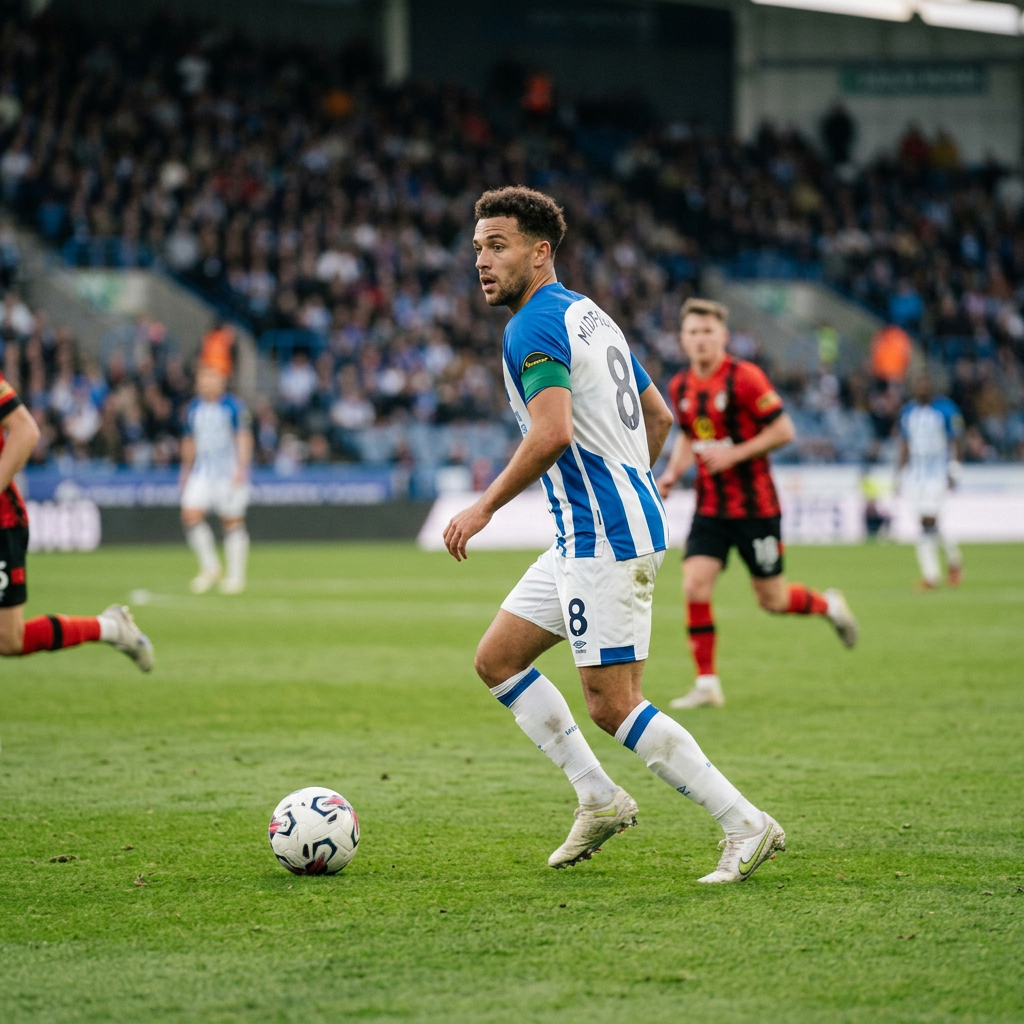
Why the best young players are already deciding before they ever touch the ball
The moment before the ball arrives is a moment in soccer that most people never see.
It does not make the highlight reel. It does not get the applause. It does not live in the stat sheet. Parents do not usually notice it. Many coaches do not train it. And yet, it is often the difference between a player who survives the game and a player who controls it.
It is the moment before the ball arrives.
That is the real battleground.
Not the touch itself.
Not the pass itself.
Not even the finish.
The critical moment happens just before contact—when the player has to scan, interpret, decide, and position the body in a way that turns chaos into clarity.
At high levels, soccer is not won by the player who can merely do something with the ball. It is won by the player who already knows what the picture looks like before the ball gets there.
That is why elite players often seem calm in situations where everyone else looks rushed. They are not calmer because they are gifted by the football gods. They are calmer because they are informed. Research on football scanning consistently shows that players who visually explore their surroundings before receiving the ball are better positioned to act quickly and effectively once possession arrives. Higher scan frequency has been associated with more successful on-ball actions and a greater likelihood of turning with the ball, while scanning itself is now widely recognized as a core perceptual-cognitive behavior in football performance.
And that matters for youth development more than most people realize.
The youth development mistake that keeps repeating itself

Too many young players are trained to react late.
They are taught technique in isolation.
They are taught patterns without pressure.
They are corrected after the obvious error.
They are praised for clean execution, but not for early perception.
So what happens?
The ball arrives, and only then does the player start thinking.
By then, it is already too late.
The defender is closing.
The window is gone.
The receiving angle is wrong.
The first touch becomes survival instead of progression.
This is one of the great failures of youth coaching: we overemphasize what happens on the ball and undertrain what happens before the ball. Official coaching resources from FIFA’s training materials stress that scanning before receiving helps a player understand how much time is available and which actions are possible, while talent-identification guidance points directly to taking in information before receiving, evaluating it, and using it to think ahead.
That is not a small detail. That is the game.
A player you would recognize, but never notice
Imagine a young midfielder. Not flashy. Not loud. No dramatic stepovers. No social media mixtape built on cones and music.
Just a player who keeps solving problems.
The ball is with the center back. Before the pass is played, the midfielder checks the shoulder once. Then again. Opponent behind. Space to the left. Fullback high. Winger tucked in. Pressure coming from the blind side.
The ball travels.
By the time it arrives, the decision has already been made.
One touch across the body. Open hips. Pass into the half-space. Team through pressure. Entire sequence looks simple.
That is exactly why it gets overlooked.
But simple is often the visual result of deep preparation.
Now imagine another player in the same position. Similar technical level. Similar athletic level. Similar age.
The pass comes. He receives flat. His feet stop. Head down. Late look. Pressure arrives. Panic touch. Backward pass or turnover.
Parents say he needs confidence.
Some coaches say he needs composure.
Others say he needs more touches.
Maybe.
But often what he really needs is better information earlier.
Because confidence without information is fake confidence. It disappears the second the game speeds up.
The science says what good coaches already know
The research here is not vague. It is clear.
Scanning in football refers to purposeful head and visual movements away from the ball to gather information before engagement. Studies of elite and youth footballers have found meaningful relationships between pre-reception exploration and performance, including better passing outcomes, more effective turns, and better action selection under pressure. One 2018 study described scanning before receiving as important enough that players who failed to explore their surroundings often put themselves at a clear disadvantage; later work examining elite match play reinforced that scanning patterns vary with context and are linked with technical success.
This should change how we coach.
Because if the evidence keeps pointing toward the same thing, then our training environments should reflect it.
Players do not merely need more reps.
They need more informed reps.
More game-like reps.
More moments where perception, body shape, decision, and execution are fused together.
That is where real player development lives.
The first touch is not the first action
This is where many coaches need to sharpen their language.
The first touch is not the first action.
The first action happened earlier.
It happened with the scan.
It happened with the shoulder check.
It happened with the body adjustment.
It happened when the player processed who was near, where pressure would come from, and what escape route existed.
By the time the foot meets the ball, the sequence is already in motion.
So when we talk about developing players, we have to stop reducing the conversation to technique as though technique exists in a vacuum. A clean first touch without perception is often just a clean way to get trapped.
Elite football is not only technical. It is perceptual. It is cognitive. It is relational. The player must read the field, predict movement, orient the body, and then execute. Current football cognition research frames these perception-action links as central to performance rather than optional add-ons.
That is why the phrase “receive, look, decide” is wrong for the modern game.
At a meaningful level, it has to become:
Look. Read. Decide. Receive. Execute.
Why some players always look “faster”
People love to say, “That player is quick.”
Sometimes they mean physically quick.
But often they mean mentally early.
The game rewards early processors.
A player who has scanned twice before the pass arrives appears faster because the solution is ready. The body is organized. The touch has purpose. The next action has direction.
This is why so many technically decent players get exposed when the level rises. It is not because technique suddenly vanished. It is because they no longer have time to begin thinking when the ball arrives.
The modern game is merciless with late thinkers.
And youth soccer is full of late thinkers being praised because the environment is slow enough to hide the problem.
Until it is not.
The anonymous story every serious coach knows
There is always a player like this.
At U11 or U12, the player looks average to casual eyes. Not the biggest. Not the fastest. Not the star. But there is something there. The player keeps arriving early to moments. Keeps finding the free side. Keeps making one-touch choices that break lines. Keeps seeming one step ahead.
Then, over time, that player separates.
Not because of hype.
Not because of a growth spurt.
Not because of a flashy move package.
Because the player learned to live in the moment before the ball arrives.
And there is another player too.
The player who dazzles in static technical exercises. Incredible in isolated patterns. Sharp in rehearsed sequences. But when pressure becomes real, the game becomes cloudy. Touches multiply. Decisions slow. Possession dies.
That player does not need more compliments.
That player needs a more truthful environment.
A better problem.
A tighter space.
A clearer demand.
A coach who understands that awareness must be trained—not assumed.
What this means for player development
If you want to build better young players, train the invisible work.
Train scanning before the ball.
Train body shape before reception.
Train receiving on angles, not in straight lines.
Train with live pressure.
Train with consequence.
Train players to gather information, not just complete actions.
This is why small-sided games matter so much when they are designed correctly. They increase touches, yes—but more importantly, they increase decisions. They create repeated opportunities to scan, orient, and solve. Research on youth football interventions has shown that even verbal cueing can increase pre-reception scanning behavior in small-sided environments, which matters because the habit itself can be shaped through training design and coaching language.
That is a big deal.
Because it means this is trainable.
Not fixed.
Not mystical.
Not reserved for “naturally smart” players.
Trainable.
But only if the environment demands it.
What coaches should say more often
Instead of constantly shouting:
- “Settle it!”
- “Pass!”
- “Move it!”
- “Turn!”
Try coaching the earlier layer:
- “What did you see before it came?”
- “Where was the pressure?”
- “Could you feel the free side?”
- “Did your body let you play forward?”
- “How many pictures did you take before receiving?”
Those are better questions.
They coach intelligence, not just obedience.
And the goal is not to create robots who repeat your answers. The goal is to create players who can solve the next problem without you.
That is real development.
What parents should understand
Parents often watch the outcome and miss the process.
A turnover may not always mean poor decision-making. Sometimes the player had the right picture and the wrong execution. Sometimes the player had the technical skill but not the pre-scan. Sometimes the player never received enough information early enough to succeed.
If you want to know whether a player is genuinely growing, do not just watch what happens when the ball reaches them.
Watch the seconds before.
Do they scan?
Do they adjust?
Do they check both shoulders?
Do they receive with intention?
Do they look surprised by pressure, or prepared for it?
Those details tell the truth.
The modern game belongs to the informed player
The future of player development does not belong to the child who can perform best in sterile drills.
It belongs to the player who can perceive quickly, decide clearly, and act with purpose.
That player understands the hidden rhythm of the game:
the pass is not the beginning of the action.
The action began before.
In the glance.
In the shoulder check.
In the body shape.
In the awareness.
In the moment before the ball arrives.
That is where the best players start winning.
And that is where better coaching must begin.
Frequently Asked Questions: The Moment Before the Ball Arrives
What does “the moment before the ball arrives” mean in soccer?
It refers to everything a player does before receiving the ball—scanning the field, checking shoulders, reading pressure, and positioning the body. This moment determines whether the next action is effective or reactive. At higher levels, decisions are made before contact, not after.
Why is scanning important in soccer?
Scanning allows players to gather information early—where teammates are, where pressure is coming from, and where space exists. Players who scan frequently are able to play faster, make better decisions, and receive the ball with purpose. Without scanning, players are often reacting late.
How can youth players improve their awareness before receiving the ball?
Awareness is trainable. Players can improve by checking both shoulders before receiving, scanning multiple times instead of once, opening their body to see more of the field, and training in game-like environments with pressure. The key is repetition in realistic situations, not isolated drills.
What is the relationship between first touch and decision-making?
The first touch is not only technical—it is directional and intentional. A good first touch reflects prior awareness, proper body shape, and a pre-made decision. Without those elements, even a clean touch can lead directly into pressure or loss of possession.
Why do some players look faster than others on the field?
In many cases, it is not physical speed but mental speed. Players who scan and process information early appear faster because they already know their next action, their body is prepared, and they avoid hesitation. They are not reacting faster—they are thinking earlier.
At what age should players start learning this?
Players should begin learning this as early as possible. Even young players can start developing scanning habits, body orientation, and awareness before receiving the ball. The earlier these habits are built, the more natural they become over time.
How do coaches train the moment before the ball arrives?
Coaches can train this through small-sided games, directional possession exercises, constrained environments, and guided questioning. The goal is to create situations where players must perceive, decide, and act—not simply repeat technical patterns without pressure.
What are common mistakes in youth soccer development related to this concept?
Common mistakes include overemphasizing technique without pressure, stopping play too often, correcting only the visible error, and failing to train scanning and body shape. These environments often produce players who look sharp in drills but struggle in real match situations.
How can parents recognize if their child is improving in this area?
Parents should watch what happens before the ball arrives. Is the player scanning? Are they adjusting body shape early? Do they appear prepared for pressure rather than surprised by it? These details reveal genuine developmental progress.
Why is this concept critical for high-level soccer?
This concept is critical because the game becomes faster and less forgiving at every level. Players who wait until they receive the ball to think are often overwhelmed. Players who understand the moment before the ball arrives can control tempo, break pressure, and make smarter decisions under stress.
Nicholas Serenati, Ph.D. | Elite Youth Soccer Coach & Sports Performance Specialist
Nicholas Serenati, Ph.D. is an elite youth soccer coach, sports performance specialist, and player development authority, and the founder and head academy coach of Royal United Football Club (RUFC) — an independent high-performance soccer academy dedicated to long-term player development.
A former NCAA Division I soccer player at Mount St. Mary’s University, Coach Serenati has vast soccer coaching experience and holds strength and conditioning and sports performance certifications, bringing a rare integration of technical expertise, tactical intelligence, and applied sports science into modern youth development environments.
With a Ph.D. in Interdisciplinary Studies and more than a decade of experience as a professor and program leader in higher education, Dr. Serenati bridges the worlds of academics and athletics, grounding his coaching methodology in evidence-based training, cognitive development, and whole-player performance systems.
His areas of specialization include:
• Youth soccer development• Technical mastery and tactical intelligence (soccer IQ)• Strength and conditioning for soccer players• Speed and agility training• Sports performance and injury resilience• Cognitive speed and decision-making• Small group and 1v1 soccer training• Long-term athlete development pathways
Under his leadership, Royal United FC has evolved into a premier independent soccer academy recognized for its rigorous training environment, hybrid European development model, and individualized player development pathways designed to prepare student-athletes for high-performance environments.
Dr. Serenati publishes research-driven insights on youth soccer development, elite training methodology, strength and conditioning, tactical intelligence, and sports performance systems across his digital platforms:
• Official Site: Coach Nicholas Serenati
• Academy Platform: Royal United FC
• Substack Publication:
Coach Nicholas Serenati’s Substack
A Coach’s Notepad: Thoughts, Questions, and Explanations
His mission is clear: to develop intelligent, technical, resilient footballers — and even greater people — through evidence-based coaching and long-term player development.
You must be logged in to post a comment.